
🚚 FREE DELIVERY IN UKRAINE • 📞 QUICK ORDER: +380 63 571 3650 • 📚 STEM KITS FOR HOME, SCHOOL AND CLUBS
🚚 FREE DELIVERY IN UKRAINE • 📞 QUICK ORDER: +380 63 571 3650 • 📚 STEM KITS FOR HOME, SCHOOL AND CLUBS
🚚 FREE DELIVERY IN UKRAINE • 📞 QUICK ORDER: +380 63 571 3650 • 📚 STEM KITS FOR HOME, SCHOOL AND CLUBS

Colour Changing Flowers Science Experiment – Kidpillar
Are you ready to add some bright colors to your flowers? With a simple experiment of changing the color of flowers, you can witness the magic
Are you ready to add some bright colors to your flowers? With the help of a simple experiment with changing the color of flowers, you will be able to see with your own eyes how the petals are transformed.
So if you’re thinking of doing STEM activities for kids at home, this color-changing flower science project is the perfect choice!
Content:
Color changing flower experiment for kids
Observation of a science experiment with color-changing flowers
Explanation of the color change of flowers
Why do flowers change color in nature?
What is the capillary effect?
Frequently asked questions
Science experiment with color changing flowers
Transform your garden full of white flowers into a rainbow wonderland with this color-changing flower experiment. This is a hands-on experiment for children to explore plant parts and their functions.
We conducted a simple, yet impressive and fun science experiment where we placed cut flowers in dyed water of various colors and observed the stunning effect it had on the color of the flowers.
What will you need to experiment with color changing flowers?
You only need a few things to get started, so this simple science experiment is a great way to spend time with the kids!
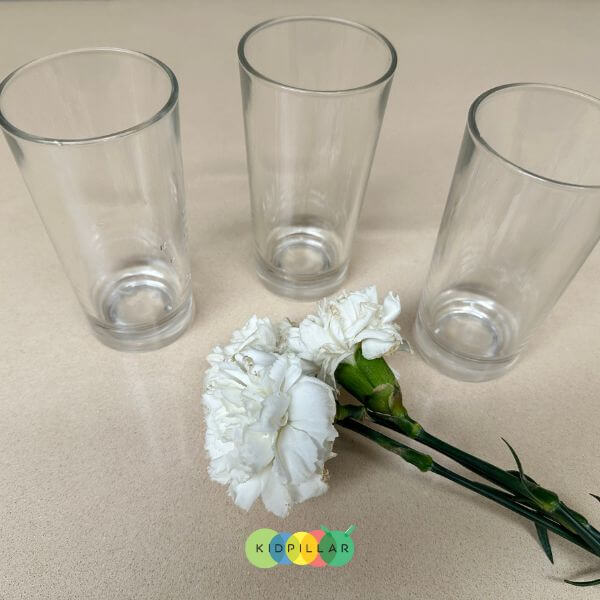
- White flowers
Choose roses, carnations, daisies and more. These are flowers that change color depending on the pH of the soil. Keep in mind that each flower changes color over a different amount of time. For quick results, use cloves.
- Liquid food dyes of various shades
- Transparent glasses
- Averruncator
- Water
How to make flowers that change color:
This experiment with color changing flowers will not give instant results and may take several hours for noticeable changes. Therefore, do not forget to regularly check the water and monitor the process.
Related: Try making flavored lettuce leaves at home, too, using fun science techniques.
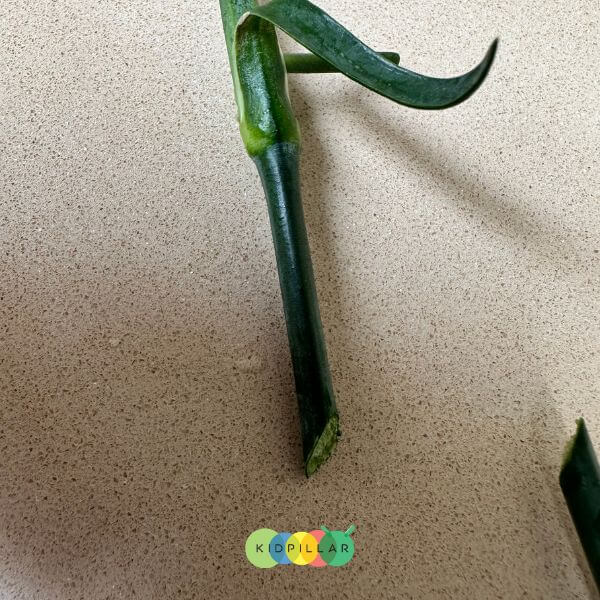
Extra Step: If you want to dye the flowers in different colors, use this step. Cut the stem in two halves, starting from the bottom and stopping in front of the flower.
Now place both halves in glasses of water of different colors and watch the petals turn into multi-colored beauties!
Quick Tip: While the flowers are slowly changing color, try this Color Changing Ublek, which is quick to make and changes color in an instant!
After about 5-8 hours, the white flowers will turn into colored ones, according to the color of the water they are placed in.
This experiment with changing the color of flowers is a real magic show, although, of course, more time-consuming!
Quick Tip: Looking for some quick magic experiments? Check out the science experiments inspired by Harry Potter!
Observations on an experiment with color-changing flowers
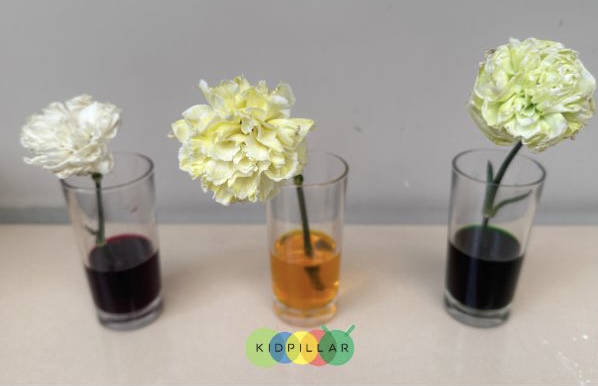
We were able to clearly see the dyes on the flower petals after about 5 hours. However, traces of colors began to appear on the petals much earlier.
Another interesting observation was that the red dye we used did not actually change the color of the flower.
Although we could see traces of color on the petals, the flower remained almost the same even after 8 hours, while the other two carnations changed their shade to yellow and green.
In our case, yellow and green dyes definitely worked better than red. Try different food colorings to see which ones work best.
This simple science experiment is a great addition to learning about plants and is perfect for the classroom or at home. But before you start this flower-changing experiment, ask the children what they think will happen if you change the color of the water the plants drink.
Asking children questions and helping them think about possible outcomes is a simple and very effective way to develop critical thinking skills in children.
We strongly recommend that you formulate a hypothesis for a science experiment with changing colors of flowers before starting the experiment, and then compare it with the result to develop STEM skills.
Quick Tip: Combine this activity with making wire flowers for a fun STEAM activity.
The Science Behind Color Changing Flowers!
Are you wondering how these beautiful flowers change color? It turns out that this is not magic, but a serious science that can give color to a flower.
It turns out that plants absorb water through the roots, but in cut flowers, the stems absorb water that reaches the petals and other parts of the plant through the capillary effect. This is one piece of the puzzle.
The second part of the puzzle is to figure out how the flowers change their color from their original color to bright yellow or dreamy green, just by sipping the colored cocktail from the water!
It turns out that plants and flowers contain pigments that give them their color, similar to the chlorophyll that makes leaves green.
But when it comes to flowers, their pigments are a bit more complex. They contain compounds called anthocyanins, which can change color depending on the pH of the environment.
And this is where our color change experiment comes in handy! By dyeing the water with food coloring that the flowers absorb, we change the pH of the environment they are in, causing their pigments to react and change color. It’s like a chemical experiment, but with flowers!
But not only dye affects the color of flowers. Factors such as temperature, light and even water type can also play a role. Therefore, it is important to control as many variables as possible to obtain accurate results.
In summary…
Basically, the magic of capillary effect and pH is at work in this flower color changing experiment!
By placing cut flowers in colored water, we harness the incredible power of this natural phenomenon. Through narrow gaps in the stem of the flower, water can flow upwards, against the force of gravity.
This is how flowers absorb colored water and show their stunning new shades. So the next time you see a lovely flower, remember the big role that capillary action and pH play in keeping it hydrated and beautiful!
If you’re doing a color-changing flowers science experiment for preschoolers and kindergartners, you can skip the pH part and stick to the capillary effect to keep it simple and straightforward.
Time to think: Can you guess why flamingos are pink? (Scroll to the bottom of the page for the answer)
Why do flowers change color?
Now you’re probably wondering why flowers change color at all. Well, it’s not just for our visual pleasure! Flowers use their color as a form of communication with their pollinators.
By changing their hue, they can attract different pollinators, such as bees or birds, to help them pollinate and reproduce.
So, not only is this experiment an interesting and visually appealing way to explore the science of pigments and pH, but it also gives us a glimpse into the fascinating world of plant communication.
What is the capillary effect?
Even after what we learned, one question may still bother you: How can flowers absorb water from the soil against gravity? This is due to the capillary effect, the ability of liquid to flow through narrow spaces or tubes, even against the force of gravity.
To explain the capillary effect to preschoolers, we like to use the analogy of drinking through a straw. Just as you suck in air to lift liquid up a straw, plants lift water through their stems and roots.
What makes the capillary effect possible?
This is due to intermolecular forces between the liquid and the contact surface, known as adhesion, as well as cohesive forces between the liquid molecules.
These forces allow liquid to rise through small gaps, such as tiny holes in the soil or narrow tubes in the xylem of a plant, against gravity. This is how water and nutrients are transported through the roots, stem and leaves of the plant.
In addition, capillary action is also responsible for phenomena such as the rise of ink in a fountain pen or the ability of a paper towel to absorb water.
It plays an important role in many natural processes and engineering applications, making it an exciting topic for research in science!
Finally, why are flamingos pink?
If you haven’t already guessed or are looking for a detailed answer to the question why these filter animals are pink in color, it is because of their diet consisting of artemia and algae. Artemia and algae are rich in carotenoids – the orange pigment. This pigment, when digested by flamingos, gives them their distinctive color!