
🚚 FREE DELIVERY IN UKRAINE • 📞 QUICK ORDER: +380 63 571 3650 • 📚 STEM KITS FOR HOME, SCHOOL AND CLUBS
🚚 FREE DELIVERY IN UKRAINE • 📞 QUICK ORDER: +380 63 571 3650 • 📚 STEM KITS FOR HOME, SCHOOL AND CLUBS
🚚 FREE DELIVERY IN UKRAINE • 📞 QUICK ORDER: +380 63 571 3650 • 📚 STEM KITS FOR HOME, SCHOOL AND CLUBS

77 Space Facts For Kids 2025 – With Free Printable
Get ready for a celestial roller coaster ride with these latest Space Facts for Kids! These crazy but true facts about space and
Get ready for a space adventure with these fun new space facts for kids! These surprising but true facts about space and the universe will expand your horizons and give you a glimpse into the unknown.
These amazing random facts about space that are sure to surprise everyone will not only keep your kids interested but also spark their imaginations.
Incorporate these little-known fun facts into your everyday conversations to get kids interested in space science and expand their knowledge of space! We’re sure your future astronauts will love it!
Space facts for kids
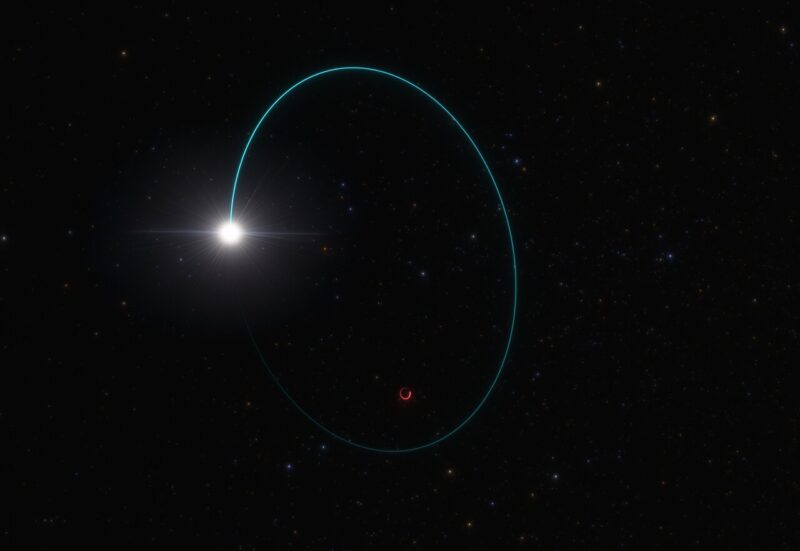
1. Discovered in April 2024, Gaia-BH3 is the largest stellar-mass black hole discovered in the Milky Way galaxy, with a mass 33 times that of our Sun. Crazy, but true!
But Sagittarius A* is a supermassive black hole located in the very center of the Milky Way, the mass of which is 4.2 million times the mass of the Sun.
The difference between these two black holes is that one is a stellar-mass black hole that was formed by the collapse of a massive star when it ran out of fuel, and the other is a supermassive black hole that was formed by the merger of increasingly massive black holes.
2. Amazing fact about the Moon – The Moon is tied to the Earth by tidal forces, which means that it rotates on its axis at exactly the same speed as it rotates around the Earth.
This rotation of the Moon is called synchronous, which means that we on Earth always see the same side of the Moon. The other side, which we never see from Earth, is known as the far side of the Moon. Strange, but a fact!
3. NASA astronauts Sunita Williams and Butch Wilmore were stuck on the ISS for 286 days due to a technical malfunction of the Boeing Starliner capsule.
Although they left Earth in June 2024 for only an 8-day mission, they ended up spending 286 days in space. During their time in space, they circled the Earth 4,576 times and at the time of landing covered 195 million kilometers. They finally returned to Earth on March 18, 2025 aboard SpaceX’s Crew Dragon spacecraft.
4. As of August 2024, Farfarout is the most distant object in the Solar System.
It is a planetoid located at a distance of approximately 132 astronomical units (AU) from the Sun. For comparison: 1 AU equals almost 150 million kilometers!
5. Almost 68-70% of the universe consists of dark energy! This mysterious energy is responsible for the accelerated expansion of the universe.
6. Saturn, whose average density is less than the density of water, can float in a pool! The only problem is finding a pool big enough to accommodate it!
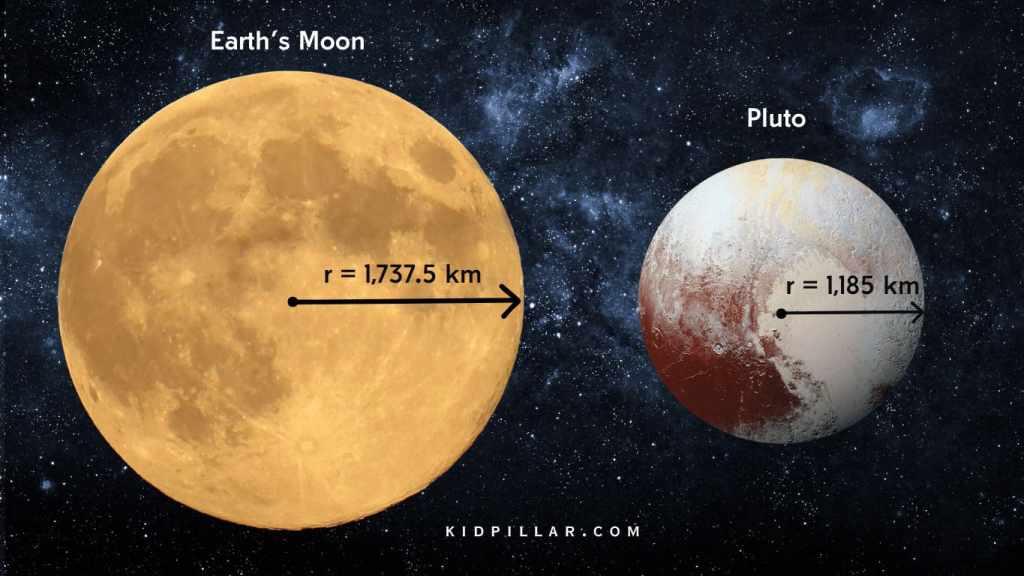
7. Did you know that the Moon is bigger than Pluto?
The radius of Pluto is 1,185 km, while the radius of our Moon is 1,737.5 km.
8. “Vanguard 1” is the satellite that has been in orbit for the longest time: it has been orbiting the Earth since 1958!
9. On the surface of Titan, a satellite of Saturn, there are oil lakes… Strange, but a fact!
10. The International Space Station (ISS) orbits the Earth every 90 minutes, making 16 revolutions around our planet in 24 hours!
It moves at a speed of 28,000 kilometers per hour and covers a distance equivalent to a trip to the moon and back in 24 hours!
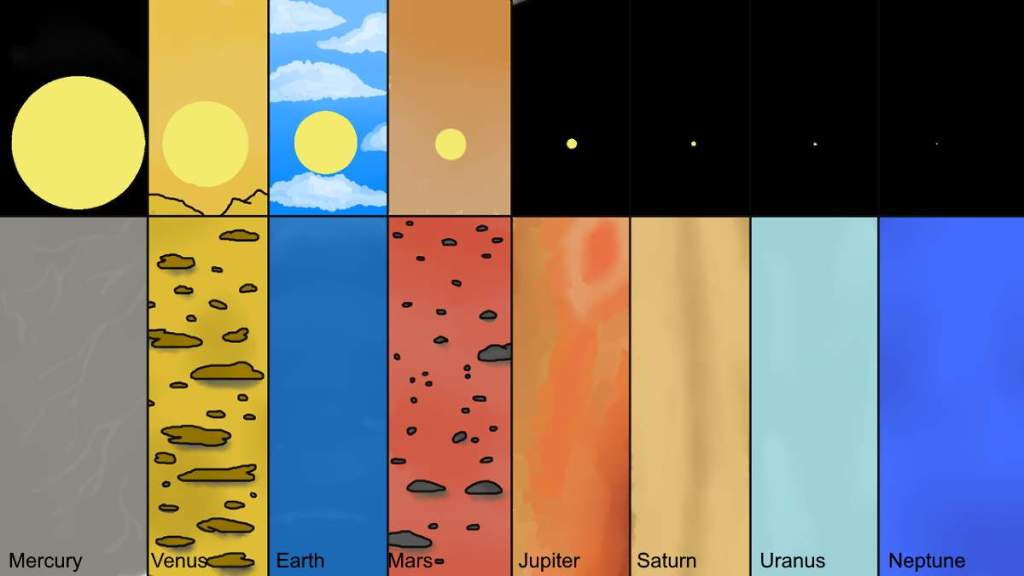
11. On Mercury, the Sun appears three times larger than on Earth! Crazy, but true!
12. Space debris orbits the Earth at an impressive speed of almost 10 km per second!
Space debris is human-made debris left floating freely in space after it has served its purpose and is no longer needed. They may include fragments of satellites, rockets, launch vehicles and cosmonauts’ belongings.
13. The Parker Solar Probe is the fastest space probe ever built! It reached an impressive speed of 400,000 miles per hour, making it the fastest man-made object.
14. UY Scuti is the largest star known to mankind. Its radius is almost 1,700 times that of the Sun, so it can span the orbits of Mercury, Venus, Earth, Mars, and possibly even Jupiter!
15. Did you know that if you get too close to a black hole, you will be stretched like spaghetti into a long, thin shape?
This phenomenon is called “spaghettification” and was first described by Stephen Hawking in his book A Brief History of Time.
16. Mars has the deepest canyons and highest mountains in the Solar System.
The highest mountain and volcano in the Solar System is Mount Olympus on Mars, which is 24 kilometers high, 2.5 times the height of Mount Everest.
Related: Are You Growing Up a Future Astronaut? Help her unravel the mysteries of space with our Space eBook (pdf), which includes hands-on activities, crafts, and fun worksheets to make learning interactive!
17. During the first 150 million years after the Big Bang, there were no galaxies, no stars, no planets!
18. The Indian “Chandrayan-3” is the first robotic probe to land on the South Pole of the Moon!
19. The New Horizons spacecraft, launched to explore the dwarf planet Pluto, carried an ounce of ashes of Clyde Tombaugh, the American astronomer who discovered the planet. Crazy, but true!
20. The International Space Station has six bedrooms, two bathrooms, a gym, and a bay window with a gorgeous 360-degree panoramic view!
21. A space or asteroid mining industry may become a reality in the future, as the asteroid belt contains $700 quintillion worth of minerals! For simplicity: 1 quintillion = 1 billion billion – crazy, but a fact!
Printable space facts
22. Venus is the hottest planet in the solar system due to its dense atmosphere that traps greenhouse gases!
23. Diamond rains on Saturn and Jupiter! Believe it or not!
24. Titan is the only satellite in the solar system that has a significant atmosphere.
25. On Mars, water exists in frozen and liquid states, giving hope for future colonization and terraforming of Mars.
Related: Check Out Science Jokes for Kids to Make Your Kids (and Yourself) Laugh!
26. Light travels from the Sun to the Earth in 8 minutes and 19 seconds.
27. Olympus is the highest planetary mountain in the Solar System. Its height is about 22 km, which is almost 2.5 times higher than the height of Everest.
28. There is no sound in space!
29. Uranus has the coldest atmosphere among the planets of the Solar System, the temperature of which drops to -224 degrees Celsius.
30. A fact about the moon – tracks on the moon can be preserved for 100 million years! It’s surprising, but the fact…
By the way: While you can’t really fly to the moon to leave your footprints there, you can definitely make prints and marks in the moon’s sand.
31. Did you know that if you could travel at the speed of light, you would never age?!
32. You cannot walk on Jupiter, Neptune, Saturn or Uranus!! These planets mostly consist of gases and do not have a solid surface.
33. Voyager 1 is the first man-made object to venture into interstellar space, and the most distant man-made object!
34. Contrary to popular opinion, the Earth does not have the shape of a perfect sphere! It protrudes near the equator, more like a “flattened ball”. Strange, but a fact!
35. Did you know that Neptune has the fastest winds in the Solar System? Their speeds reach an impressive 1,600 miles per hour!
36. Most stars are between 1 and 10 billion years old.
37. Almost 95% of the universe consists of dark matter and dark energy!
They are called “dark” because at the moment scientists cannot observe them directly
38. Comets are also known as “dirty snowballs”.
39. The James Webb telescope is the largest space telescope in the world with a diameter of the main mirror of 6.5 meters! For comparison: the diameter of the main mirror of the Hubble telescope is 2.4 meters.
40. In 1927, Georges Lemaître proposed a theory explaining the formation of the universe, which became known as the Big Bang theory!
41. Valles Marineris on Mars, the red planet, is the largest canyon in the Solar System! It is almost eight times longer and four times deeper than the Grand Canyon, the largest canyon on Earth.
42. Ceres is the only dwarf planet in the inner part of the Solar System, located in the asteroid belt that stretches between Mars and Jupiter!
43. Giant black holes can emit particles at speeds comparable to the speed of light!
44. The sunset on Mars seems blue!! This is another interesting fact for children, which will surely surprise them. This is mainly due to fine dust in the atmosphere, which scatters blue light more than any other color.
45. All pulsars are neutron stars, but not all neutron stars are pulsars!
46. Valentina Tereshkova was the first woman to fly into space! A Soviet cosmonaut, she flew into space in 1963 and spent more than 70 hours in Earth’s orbit.
See also: Learn more about female STEM pioneers who are inspiring girls around the world!
47. A neutron star can rotate 600 times per second.
48. Did you know that one day on Venus lasts almost as long as 8 months on Earth?
49. Fruit flies were the first living creatures intentionally sent into space!
50. Astrochimp Ham was the first hominid in space!
51. Jupiter takes only 10 hours to make a full revolution on its axis, making it the fastest rotating planet in the Solar System.
As the largest planet in the solar system, it has strong gravity that pulls the most mass as it moves through space.
52. Jupiter’s Great Red Spot is a giant storm that has been raging for hundreds of years! It is so big that three Earths can be placed in it.
53. Venus is the only planet that rotates clockwise! It rotates in the opposite direction relative to the movement around the Sun.
54. There are five dwarf planets in the solar system — Ceres, Pluto, Haumea, Makemake and Eris!
55. The Sun takes 230 to 250 million Earth years to orbit the Milky Way.
56. Here’s another little-known interesting fact about the Sun — The Sun has no solid surface… It’s a huge ball of plasma!
57. Did you know that the magnetic poles of the Sun change every 11 years? This means that the North Pole of the Sun becomes the South Pole, and the South Pole becomes the North Pole. Strange, but a fact!
58. There are more stars in space than grains of sand on the beach! It’s surprising, but the fact…
59. In 1961, Yuri Gagarin from the Soviet Union became the first man in space.
60. The mass of Jupiter is almost 2.5 times greater than the combined mass of all other planets of the Solar System!
61. Did you know that Pluto got its name from an 11-year-old girl from Oxford, Venetia Burney?
62. Proxima Centauri is the closest star to Earth. This tiny red dwarf star is just 4.24 light-years (or 39.9 trillion kilometers) away, making it the closest star to our solar system. For comparison: the Sun is at a distance of about 150 million kilometers from us.
63. The nearest star system, Alpha Centauri, is almost 4.2 light years away.
64. The Sun is a yellow dwarf star that is almost 4.5 billion years old!
65. Applesauce was the first food astronauts ate in space.
66. Chang’e-4 is the first probe to land on the dark side of the moon, also known as the far side, in 2018!
67. On the planet Venus, the Sun rises in the west and sets in the east!
68. NASA’s NEAR (Near Earth Asteroid Rendezvous) Shoemaker spacecraft was the first spacecraft to land on an asteroid.
It landed on the asteroid Eros on February 12, 2001.
69. Venus was the first planet visited by a spacecraft!
NASA’s Mariner 2 spacecraft flew past this planet in 1962.
70. The moon takes the same amount of time, 27.3 days, to make one revolution around its axis as it does one revolution around the Earth.
71. The largest comet orbiting the Solar System is Comet C/2014 UN271 or Bernardinelli-Bernstein with a nucleus almost 140 km wide!
72. Did you know that every planet in the solar system has been hit by asteroids at some point in its existence!
73. One gigaric is equal to 1,000,000,000 years!
74. It is believed that the observed universe has a diameter of 92 billion light years!
75. Mercury is the fastest-orbiting planet in the Solar System, taking only 88 Earth days to make a complete revolution around the Sun.
76. Apophis, also known as the “God of Chaos,” is a near-Earth asteroid 370 meters (1,210 feet) in diameter. It is expected to pass within 30,000 miles (48,300 kilometers) of Earth in April 2029. This will provide a rare opportunity to see an asteroid from Earth with the naked eye!
77. The solar system was formed 4.6 billion years ago! On the other hand, the age of the universe is estimated to be 13.8 billion years.
Frequently asked questions
Source: 77 Space Facts for Kids 2026