
🚚 FREE DELIVERY IN UKRAINE • 📞 QUICK ORDER: +380 63 571 3650 • 📚 STEM KITS FOR HOME, SCHOOL AND CLUBS
🚚 FREE DELIVERY IN UKRAINE • 📞 QUICK ORDER: +380 63 571 3650 • 📚 STEM KITS FOR HOME, SCHOOL AND CLUBS
🚚 FREE DELIVERY IN UKRAINE • 📞 QUICK ORDER: +380 63 571 3650 • 📚 STEM KITS FOR HOME, SCHOOL AND CLUBS

How Children Benefit from Math Art
Mathematics and art go far ahead. From the beginning, the two were combined to create the most beautiful structures, painting
Math and art are important. Since the beginning, the two have been combined to create the most beautiful structures, paintings and timeless murals. It is enough to look around the park to open your eyes and see how beautifully nature played with mathematical art.
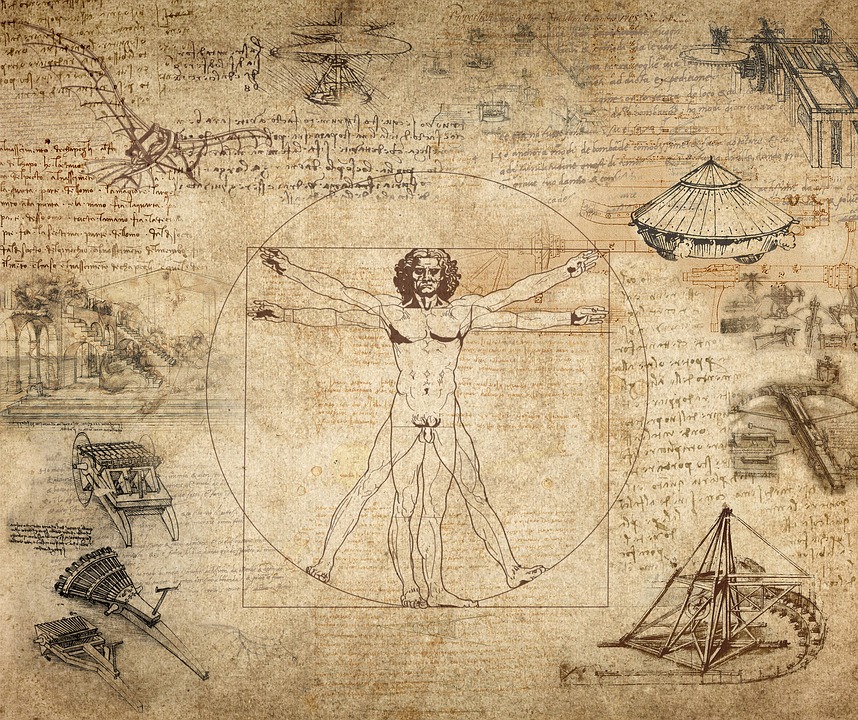
The famous mathematician Leonardo Fibonacci discovered the most interesting patterns in nature. He was one of the prominent mathematicians who popularized how the elements of nature follow a set pattern. Artists such as Leonardo da Vinci, Picasso, Kandinsky all used mathematics extensively in their art. It’s amazing why we teach math in isolation these days.
What happens when math is taught with art?
Math art projects your kids will love to try:
1. Origami
Origami is the Japanese art of folding paper into different shapes. With this technique, a simple sheet of paper can be turned into a three-dimensional object. Children benefit from the art of origami because it requires them to visualize and understand. Complex mathematical concepts such as proportions, symmetry, geometry can be easily learned through this art.
2. Block printing
Repurpose old blocks lying around the house with block printing. This is a simple but great way to teach 3D and 2D objects. Give your child paint and old blocks and ask them to print a house or a cat from the blocks.
3. Collage of figures
Take an old magazine or craft paper and cut different shapes out of it. Invite the child to play with these figures and make a collage. Let her imagination guide her. This is a great way to gain an understanding of shapes and their attributes.
4. Shape Craft
This is useful when learning to quantify and compare. Take the shape of your choice and cut it in different sizes. Ask the child to stick them so that all the cutouts are visible. To do this, the child simply has to insert the figures in descending order. But, if you put it this way, it makes the child think and arrange. Great for developing spatial and logical reasoning skills.
5. Literature
6. Pattern Art
Pattern recognition is an important concept in data analysis. Teach your child this with this simple coloring page. Draw any picture and ask the child to color it in different patterns. Try to include as many patterns as possible in the drawing.