
🚚 FREE DELIVERY IN UKRAINE • 📞 QUICK ORDER: +380 63 571 3650 • 📚 STEM KITS FOR HOME, SCHOOL AND CLUBS
🚚 FREE DELIVERY IN UKRAINE • 📞 QUICK ORDER: +380 63 571 3650 • 📚 STEM KITS FOR HOME, SCHOOL AND CLUBS
🚚 FREE DELIVERY IN UKRAINE • 📞 QUICK ORDER: +380 63 571 3650 • 📚 STEM KITS FOR HOME, SCHOOL AND CLUBS

How to Get Children Interested in Math Early On
Mathematics is the science of quantifying and applying abstract concepts to real-world purposes. Since the application of mathematics can
Mathematics is the science of quantifying and applying abstract concepts to achieve real goals. Since the application of mathematics can be observed everywhere, incorporating it into regular classes makes learning mathematics interesting for children.
It also gives parents a great opportunity to get their kids interested in math activities for kids from a very young age.
Mathematics is a kind of language that helps you make sense of the world around you. Every aspect of your life involves math, from telling time to identifying different shapes in the world to measuring things and even cooking.
Because a child depends so much on math, it is very important to develop strong math skills for children. Strong math skills can lead to higher academic success and are also a good indicator of developing strong logical and critical thinking skills.
How to get your child interested in mathematics?
Mathematics for children revolves around quantity, shape, comparison and differentiation. This is what they begin to use, even if they do not know the mathematical language itself.
For example, a 2-year-old child will take a bowl with more candies than one containing one candy if given the choice. They use their mathematical knowledge to compare and quantify.
Similarly, an older child will choose a larger (longer) bar of chocolate if given a choice between a mini bar and a standard bar of chocolate. Children instinctively use their innate mathematical skills to their advantage.
One way to build a lifelong love of math is to let kids in the kitchen. The kitchen is like a mathematical supermarket! Here you can perform a variety of measurements, sorting, and basic math operations.
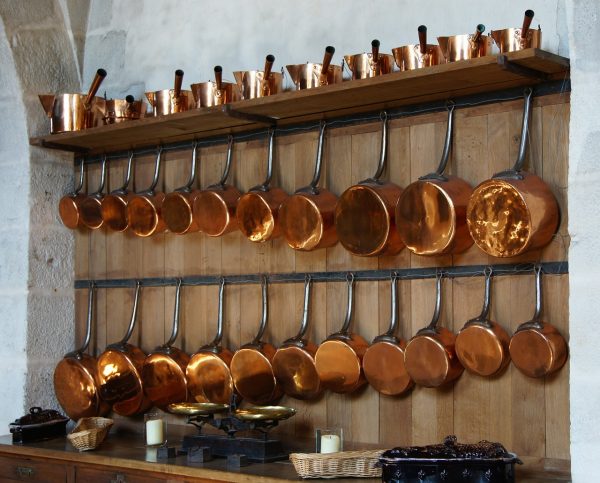
Let your child practice their spatial thinking skills, a very important aspect of math, by placing pots and pans on the kitchen cabinets. You can also try other spatial thinking exercises to make it stronger.
You don’t need store-bought sorting toys if you let your kids explore your kitchen. Let them insert the pans into each other and voila! You’ve taught them a hands-on lesson about shapes, sizes, and increasing/decreasing numbers.
Help your child mix a bowl of fruit salad while starting to learn about proportions and fractions. There are literally as many math activities for kids in your family as you can imagine.
Counting stairs, sketching the shape of your room and windows, observing the wheels of a car, analyzing the symmetry of the human body – there is mathematics everywhere. All you really have to do is open that door for your kids.
This natural understanding should be used to build a strong foundation of mathematics for children and a lifelong love of the subject.
As a STEM teacher, I meet many kids who are brilliant, but very few who are passionate about solving math problems. Most children struggle when we reach the math component.
Now these children are very young and do not yet have clear ideas or fear. However, most of them struggle with simple practical applications of mathematics.
Math can really be fun if you do it right. However, many parents find it difficult to instill in their children interest and love for this subject.
Getting math right at an early age can rewire a child’s brain to develop thinking, better problem solving, and building a positive attitude toward the most daunting subject.
We don’t need to be a scientist to get math right. Just a small change in outlook and thinking would do the trick. Here are some ideas:
1. Make math a part of everyday life
Mathematics is all around us. The moment we wake up, we look at the time. Time is nothing more than a simple division of day and night into different zones – before noon and after noon.
Introducing numbers as part of our lives is a great way to increase interest in numbers.
2. Encourage problem solving
Give the children the opportunity to solve problems and do their own calculations, ask them to cut their sandwich in half, into 4 squares or into 2 triangles.
Let them work it out on their own. You’ll be amazed how such a simple activity will engage them and guide them through the process.
3. Approach mistakes with encouragement
Children who make mistakes are more likely to succeed than those who never make mistakes. Mistakes are evidence of trying to approach those mistakes with encouragement rather than criticism.
Remember, a simple calculation for adults can be difficult for small children.
4. Play board games
Board games are a fun way to teach early numeracy skills. Number recognition and counting are often part of board games and can be easily learned while playing. Here’s a great list of board games to get you started.
Related: Also check out these easy and fun 10-minute number games for kids to improve your child’s mental math.
5. Use the correct jargon
When we talk about big and small, tall and short, we are essentially doing math. Children can learn a lot from the right lingo.
Turn it into a game of “I spy” and ask them to find the tallest tree, the biggest flower and the smallest pebble.
When parents use these words in their daily routine, children pick up on them and learn important math principles.
6. Read math textbooks
There are a large number of story books, math textbooks and rhymes that can help children develop a love for the subject. Three Little Pigs, Ants go Marching, Noah’s Ark are some daily reading resources that include math.
7. Mix it up with art
Mathematics and art create a perfect harmony. Simple drawings will introduce your child to the world of shapes, proportions and symmetry. Simple geoboard exercises, string art, weaving are some great ways to combine the two.
Math is far from boring, and if your child’s teaching style is even close, here are some fun and interesting ideas to help you.
8. Use humor
It’s no secret that the best learning happens while having fun. Add a generous dose of humor to your math lessons with these math jokes that are sure to make everyone laugh and remember the concepts.
Mathematics tasks for preschoolers
1. Contemplation of clouds
We all did it as kids. How fun to spot figures flying across the sky! Let your child develop amazing and mathematical intelligence by discovering shapes in the clouds.
Make it practical by giving her a drawing sheet and asking her to draw the shapes they see.
2. I observe the shapes
Another fun math activity to do with kids, it will also keep you occupied while your little one looks for shapes.
Make small chips of different shapes and put them in a bowl. Your child draws a chip and sees a shape drawn around the house. Also great for improving observational skills!
Related: Also check out 45 Kindergarten Math Games to Make Math Fun for Your Kids.
3. The number matches
Learning math doesn’t always require store-bought worksheets. Use plain paper and a pen to write the numbers in one column and draw the corresponding number in the other column. Let your child count and compare!
4. Numbers in cubes
Dice are a great device to start learning to count. With only six numbers, it is well suited to lay a formative foundation for numbers.
Roll the dice, count the dots out loud and write down the corresponding number. This is such a simple exercise that connects numbers to quantification.
Before you know it, your child will begin to associate quantity with numbers. When they grow, you can use two cubes.
5. Counting body parts
Another super cool math exercise for kids is counting body parts. One nose, two ears, 3 fingers in a finger, 4 cute milk teeth, 5 chubby fingers and so on. Your little one will love counting their body parts and learning their names!
6. Creating patterns
This is one math activity for kids that all parents should do because it lays a strong foundation in math. Teach your child to recognize patterns on clothing such as checks, stripes, polka dots, etc.
Later, help your child notice patterns in his daily routine. From waking up, to getting ready, from breakfast to dinner, until we finally fall asleep, we follow a pattern.
7. Tickle Body Math
This is a really fun math activity with kids, especially the younger ones. Start with their finger and measure their hand using the palm of your hand, counting 1, 2, and 3.
Say out loud, “Your hand is 3 palms long,” and when you reach their shoulder, tickle them! Let them do the same to you!
8. A game inspired by loose parts
We love puzzle-inspired math games. For this age group, you can use chunky blocks, play dough, wooden blocks, etc., anything large to avoid the danger of mouthing or choking. You also need to keep your hawk eye on all the time, but it’s very useful!
Let your child explore and build with block shapes, sculpt play dough and stack wooden blocks. All of these activities also double their motor skills, thus enhancing the overall learning experience.
Mathematical classes for children – from 4 to 7 years old
1. Games with numbers
For older children, one of the best ways to pick up math is through number games. As we have already said, mathematics should only bring pleasure. Get your older kids involved in fun, easy number games and you’ll have a budding Aryabhata at home.
2. Mathematical art
Math art is a great way to help kids imagine and play with math. Mathematics has always been an important part of art, and vice versa. Almost all great artists, such as Leonardo da Vinci and others, were also great mathematicians.
3. Card games
Playing cards are a great way to teach children basic math skills such as addition, subtraction, and multiplication. All you need is a solid deck of cards and a limitless imagination.
4. Dice games
Older children will need more than one cube. Turn dice rolling into a math game of addition and multiplication. Math cube games for kids also develop the subitizing skills needed for mental math.
5. Loose parts
Children from four to seven years old are distinguished by high creativity and self-expression. Bet on this ability to create patterns and numbers from separate parts and get inspired with a game of Loose Part Math.
6. Increase your math vocabulary
Children whose parents regularly use math-related jargon generally outperform their peers who are not familiar with math jargon. Make words like symmetry, identical, equal, tessellation, pattern part of your vocabulary with children.
7. Pretend play
Another creative math activity for kids: Make an ice cream cart or grocery store pretend play to practice your child’s math skills.
8. Cooking without flame
Help your kids make sandwiches and cut them into quarters, squares and triangles to sharpen their math skills. Get them involved in making the pie dough by measuring and counting the ingredients.
9. Classics
Classics with numbers is the perfect math exercise for kids who just love to move. Let them practice counting, skip counting and operative actions while playing a fun classic game.
10. Sudoku and picture puzzles
Sudoku and picture puzzles are a great way to improve math skills while having fun. Just Google them and you’ll have an unlimited source of free math games for kids right in the comfort of your own home without spending a dime!
Online math games for kids
In addition to these hands-on math exercises, kids today have access to online math programs and games that can make learning and practicing math fun. These online resources are a great way to get interested in math.
1. Prodigy
This is a free math game designed for children from class I to VIII. Its game characters compete with children to make the game interesting and the learning of mathematics exciting for children.
2. Splash Math
Another free online math game designed for kids in grades 1-5. This program encourages independent, self-directed learning and is great for kids who are new to online math games and apps.
3. Khan Academy Kids
The Khan Academy expansion is designed specifically for children aged three and over. Beautiful graphics and animal characters present educational content in a friendly and playful way, making learning enjoyable for young children.
You will definitely not be disappointed with it.
4. Mathematical monster
This is the coolest math monster your kids have ever met. It really takes the fear out of math and your kids will have a blast learning math with Max the Monster.
5. Moose Math
Designed for kindergarten and first graders, this program is sure to delight your children and help them learn. It also allows parents to monitor their child’s progress through the report card. Based on the Common Core Standards, it offers excellent online math learning.
6. Twelve a Dozen
Suitable for ages eight and up, this program develops basic math concepts. Children solve a variety of puzzles based on basic math concepts to progress through the game.
7. Math Learning Center
One of the best online platforms for practicing math skills, this one offers 10 free app-based modules aimed at different skill levels.
8. Mathematical slide
The mathematical slide is intended for children from 6 to 12 years old. This is a great resource for teaching children and helping them learn the meaning of place. With four free versions, your kids can really brush up on their basic math concepts and place values.
All these apps and games make learning fun and very exciting for kids. Parents should exercise little control over screen time guidelines. This fun, crafty approach to math is sure to be a win-win for both parents and math-shy kids alike.
If you’re too worried about screen time and trying to avoid it, another way to get them interested in math is to gamify math exercises and homework.
Start with what your child is learning at school, then turn it into fun games with yours. baby. Similar to skip homework, counting can be turned into a game of passing the ball and calling the numbers.
If you end up with a game version of schoolwork, children will find it easy to write them down in their notebooks.
Similarly, you might want to think about how to add an element of play/fun to the other math homework your child does at school. Simple thinking can help here.
You don’t need to spend hours preparing. Work with tambola counters, dominoes, cubes to gamify your child’s math homework.
Math card games for kids are another exciting way to make learning math really fun for kids.
Picture puzzles and math puzzles like Shape Sodoku, Ken-Ken, Stardoku, Tic-Tac-Toe, Shape puzzles, Tangram are also great games for kids without a screen. develop mathematical skills.
The key to getting your child involved in these kinds of puzzles is to get yourself involved. Carefully guide them on how to solve these puzzles. You can work on easy math puzzles to get them interested in numbers and operators.
Create a simple candy math game by assigning a child a list of candy and money. Have them calculate how much money they need to buy everything on the list and whether they can find good, cheaper substitutes.
Let her do the simple math for you at the grocery store. All you need is a little patience and time.
Teaching kids math with money is not only a great way to show them how to use money, but also to practice basic arithmetic.
Have your child go with you to the bank or ATM to see how the entire banking system revolves around numbers. Your child will be amazed at how much math is used every day.
You can also use games like Snakes and Ladders, Ludo, Dominoes, Monopoly, Matchbox to sharpen your child’s math skills. Ask them to count and calculate their moves each time.
Refrain from helping children with imaginary math operations for them, and say a big no to using calculators. These simple everyday habits work like magic in improving and enhancing math skills.
Mathematical board games for children
1. Qwirkle
It’s a simple game of matching patterns and attributes to form a sequence of tiles. It’s easy to learn and play, and kids of all ages will love it.
Related: Looking for toys that provide many other skills? Check out this huge list of educational toys that will develop your children’s minds.
2. Monopoly
This classic game teaches kids to make the best use of money by using their math skills. Play the game “Monopoly” and teach your children how to perform basic math operations.
3. Ocean Raiders
A great sequence and addition game for ages six and up, this game is sure to get your kids into arithmetic.
4. Math Buzz
A great family math board game to play with kids, Math Buzz allows you and your child to do math in the most fun way possible.
5. Math Safari
As the name suggests, this board game will take you and your kids on a math safari of numbers, shapes, time, measurements and basic operations. Suitable for children from six years old.
6. Super Math Spy
Develop your child’s mental math skills with this super fun spy math game. Perfect game for family games.
7. Domino
This classic game has been around for years and is a great game that almost naturally sparks an interest in math.
8. Sum Genius
A great math game for kids that inspires them to test their math skills. This highly competitive game will surely help you motivate your kids.
Mathematics books for children
In addition to enjoying the aforementioned math exercises and math games for kids, reading is another great way to instill math acumen and help children see its relevance in the world around them.
Spending 10-15 minutes each day reading a math book can greatly improve your child’s mathematical thinking. Here are a few titles we recommend by topic:
Counters for preschoolers
1. My Granny Went to Market
What better way to learn to count than with rhymes from around the world! This is a wonderful collection of counters from around the world that will make your child sing and dance to the numbers.
2. Dogs – the book “Squealing and barking”
Bring humor to learning math with this gem from Sandra Boynton. Perfect for young children, it’s full of silliness and math.
3. Eric Karl “1 2 3 to the Zoo”
You can’t go wrong with this one. Filled with beautiful illustrations, this book will teach your children to count to 10.
4. My First Gruffalo – Can you Count?
It’s one of our personal favorites that we still treasure. This is a puzzle book that will teach your little one to count to 5.
5. Ten black dots
This is a great picture book that will spark imagination while counting. Your kids are sure to love it and create their own versions of creative creations while reading this book.
6. How many legs?
This fun counting picture book will take you and your kids on a fun counting ride.
7. “Fish Eyes” is a book you can rely on
This brightly colored book will introduce your child to the world of arithmetic and early addition. Beautifully illustrated, this book is a feast for the eyes.
8. Zin! Zin! Zin! Violin
We highly recommend this one! Zin! Zin! Zin! The violin will introduce your children to the world of music and numbers. You definitely shouldn’t miss this one.
9. Anno’s Counting Book
This free book is based on the belief that every child has an innate mathematical ability, and children can learn to count before they can barely speak. It develops young children’s natural mathematical talent and introduces them to the wonderful and exciting world of numbers.
10. Zero is leaves on trees
This fascinating book will introduce your children to one of the most important numbers – zero! Let them solve the mystery with this wonderful book.
Additional books for kindergarten
1. What’s new at the zoo? The adventure of adding animals
Welcome to the world of adding animals! You can’t go wrong by adding furry, adorable animals. Packed with fun animal facts and puzzles, this book is sure to delight you.
2. Animals on board
Part of the MathStart series, this book takes your child on an extra adventure with Jill the truck driver and her dog. After reading this book, your car journeys will never be the same.
3. Mission addition
This is a great start to introduce young children to the concept of addition. Full of humor and quirky illustrations, this book is sure to tickle your child’s math fancy.
4. Tally O’Malley
Another recommendation for the MathStart series: This book will introduce your child to arithmetic while counting cars on a long drive.
5. Adding Annie
Teach your kids to add with this great book. Vivid illustrations and an engaging plot make it an interesting math read.
Textbooks on subtraction for 1st grade
1. Action of subtraction
Learn about subtraction or the act of taking away with this fun, humorous book. Rhyming text, funny illustrations and similar examples make this option worth your purchase.
2. If you were a minus sign
Perfect for young adults, this book has easy-to-understand text, attractive illustrations, and a great story to teach children about subtraction.
3. Action of subtraction
Teach your children the concept of subtraction with adorable animals from the book. Your child will be delighted!
4. Hershey’s Kisses Subtraction Book
You can’t go wrong with subtraction when it comes to Hershey’s Kisses. This book teaches subtraction in a fun and easy way.
5. Ten cunning piranhas
This is a clever story about cunning piranhas and subtraction. A great read for learning subtraction by one and counting backwards.
Books with figures for babies
1. KidPillar STEM Shapes eBook
If you’re looking for a book that’s bigger than usual and way ahead of its league, this is it! A great STEM eBook for kids, it will help your kids understand shapes, lay the foundation for spatial thinking, and work on building your kids’ math skills.
It contains STEM activities and worksheets that make it quintessential for every child.
2. Round is a Tortilla
Introduce your child to the world of shapes with this beautifully illustrated book. Look at the circle in the tortilla, the triangles on the watermelons, and the rectangles on the ice cream carts in this math picture book.
3. When the line bends, the shape begins
This is a great start for children who are beginning to recognize and distinguish shapes. Colorful pages with light text facilitate reading.
4. A perfect square
An adventure math book about a perfect square that transforms far beyond the square’s symmetry.
5. Forms of the mouse
Let your child explore the world of shapes and see how different shapes can combine to create a living thing.
Books with patterns for children
1. KidPillar STEM Patterns eBook
Whether your child is a beginner or well versed in patterns, this is one math book for kids that will take their understanding of “patterns” to the next level.
This beautifully illustrated book comes with real-world application patterns, pattern exercises, and worksheets to build a strong mathematical foundation.
2. Pattern Fish
A great book for beginners, this book explores patterns in nature, particularly in fish! Definitely a great math book for kids.
3. The M&M’s Brand Color Pattern Book
You can’t go wrong with candy, and this book will teach you how to make candy patterns. Simply delicious!
4. I see a pattern here
Help your child explore patterns in their neighborhood and environment with this easy-to-understand pattern book.
5. A-B-A-B-A — A Book of Pattern Play
This book is a humorous look at patterns, what they are and how you can create them with your own hands. This is a great starting point for kids learning patterns.