
🚚 FREE DELIVERY IN UKRAINE • 📞 QUICK ORDER: +380 63 571 3650 • 📚 STEM KITS FOR HOME, SCHOOL AND CLUBS
🚚 FREE DELIVERY IN UKRAINE • 📞 QUICK ORDER: +380 63 571 3650 • 📚 STEM KITS FOR HOME, SCHOOL AND CLUBS
🚚 FREE DELIVERY IN UKRAINE • 📞 QUICK ORDER: +380 63 571 3650 • 📚 STEM KITS FOR HOME, SCHOOL AND CLUBS

Child Innovators Who Changed the World
"Baby, you can move mountains" Dr. Seuss Such a profound statement! And these children took this statement very seriously. Here
“Baby, you’ll move mountains”
Dr. Süss
Such a profound statement! And these children took this statement very seriously. Here’s a list of innovative kids who we think changed the world forever.
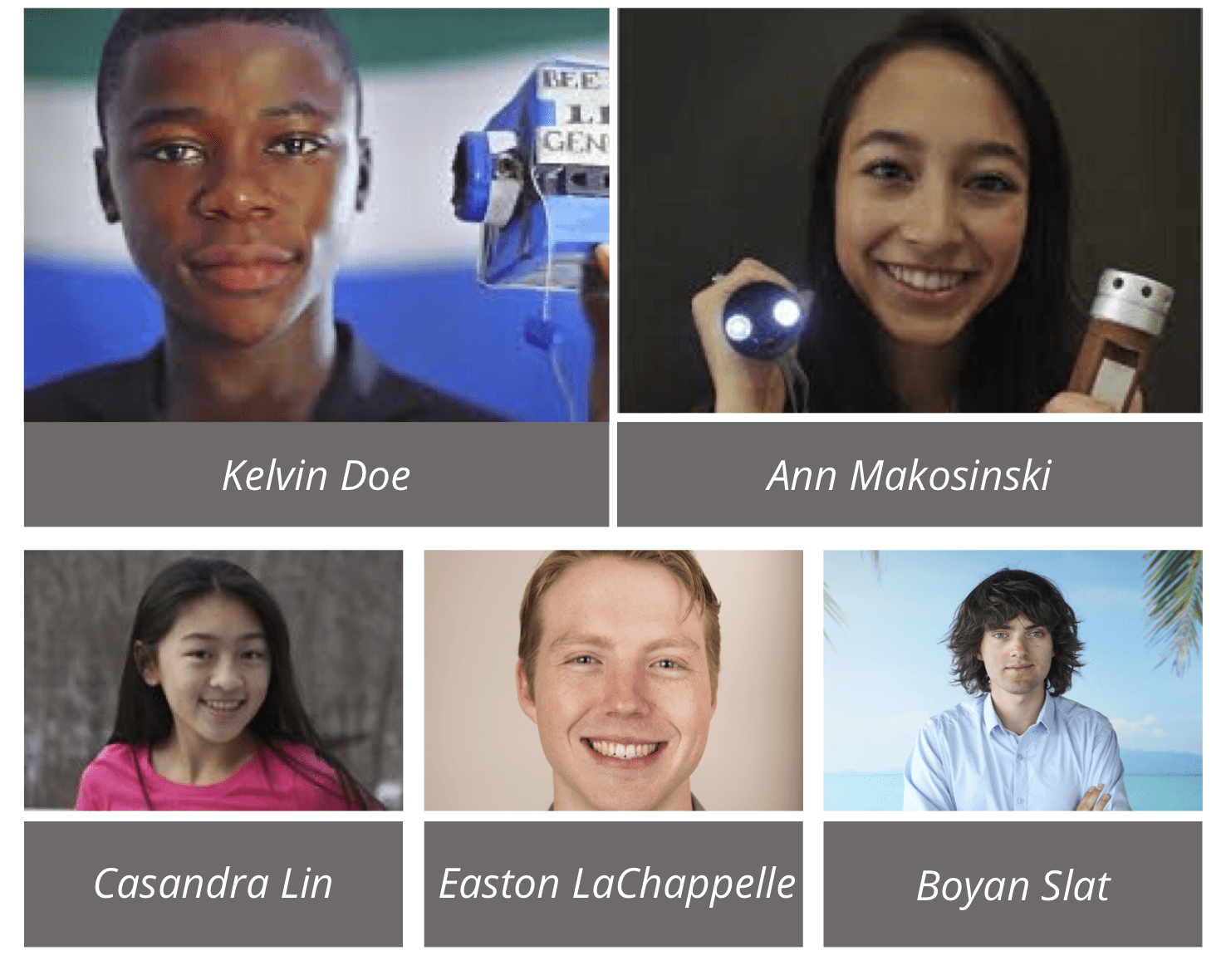
Their determination and passion to make this world a better place has earned them respect and fame that few adults have achieved in a lifetime.
Innovative children who changed the world
1. Calvin Dow
Born in Sierra Leone, Kevin Doe is known as the world’s youngest self-taught engineer. When he was 13 years old, he invented a battery capable of powering homes in the deprived city of Freetown.
He also created a microphone, a radio amplifier, a sound amplifier and a three-channel mixer. Quite a lot when you are self-taught and build everything from discarded objects and scrap.
2. Ann Makosinski
A Canadian inventor has developed a flashlight called Hollow FlashLight that uses body heat as a power source. No batteries required!
The creation of the flashlight was inspired by the desire to help a friend who had no electricity at night and was studying hard.
3. Cassandra Lin
This innovative kid is doing a great job helping his community and saving the environment.
She proposed a solution to turn used and discarded cooking oil into biofuel for heating the homes of the needy. Her work has earned her numerous accolades and awards.
4. Easton LaChappelle
This geek who loved to take things apart is credited with developing an affordable robotic prosthetic arm known as the RoboArm.
Its mission is to help people with disabilities live with grace by designing accessible prosthetics through technology.
5. Boyan Slat
Stunned by the amount of plastic while fishing in Greece, Boyan Slat thought about a solution to clean the ocean of plastic and thus founded “Ocean Cleanup”.
Since then, Ocean Cleanup has been working on solutions to remove plastic from the oceans.
6. Gitanjali Rao
This 12-year-old innovator has been named America’s Best Young Scientist for inventing a life-saving device that can detect lead in water. She was inspired by her affordable solution after witnessing Michigan’s water crisis.
7. Jack Andraka
A teenage pancreatic cancer prodigy, as Smithsonian magazine calls him, is credited with inventing a way to detect pancreatic cancer at an early stage.
Pancreatic cancer is one of the deadliest types of cancer and is often detected at a late stage. When a close family friend died of pancreatic cancer, Jack was motivated to read about cancer and find a better way to detect it earlier.
8. Teagan Steadman
A 2017 Youth Award laureate, Teagan started early when he learned his peer had childhood cancer.
He began by raising funds to help children with cancer, and later became so involved that he began to study the disease and its treatment. He then offered an improved treatment that earned him applause and the 2017 Youth Award.
9. Alex Deans
Alex Deans is the inventor of iAid, a wearable technology device that helps visually impaired people find their way around easily. He received numerous awards for his invention.
What sparked his interest in such devices was when he helped a woman cross the street and discovered by chance that there were several devices available for the visually impaired that could improve their navigation.
10. Elif Bilgin
After receiving the Scientific American “Science in Action Award” and the “Inspired Idea Award” from Google, Elif Bilgin invented a way to turn banana peels into bioplastics.
This persistent girl succeeded after only 10 failed attempts, with the last two being successful. This little innovator baby is not only smart, but also very persistent.
11. Aryaman Khandelwal
Impressed by the state of medical affairs in his home village, Aryaman worked with a local group and developed an application to record, store and analyze medical information to better serve the rural community.
All of the above child innovators are not extraordinary by birth. But unusual because of their tendency to encourage others and solve the problems they face.
This unites them all in one dominant feature – curiosity.
They are curious, eager to explore and learn. Don’t be afraid to fail or find the perfect answers. This is what really sets them apart.
Now imagine if you could do the same for your child. The possibilities would be endless, as would their achievements.
How can you unlock your child’s potential?
Instill curiosity
Encourage your child to observe and be curious. And never judge them by their grades! Cultivate curiosity and problem solving. Teach them to reason and doubt, to look beyond the obvious and to experiment.
Make their learning practical.
No inventor ever achieved anything without putting in the work. Ideas are great, but they need to be implemented to bring about change.
Likewise, learning should be practical. Reading that never gets your hands on doesn’t last.
Think pragmatically, do you remember a recipe for a simple dish that you’ve never cooked? Can you remember how to run a regression analysis if you are not part of your organization’s statistics team? So let the learning be practical.
Equip them with a growth mindset
Leave room for mistakes and let them learn from their failures. Every mistake is a step towards success. Success lies not in achieving the desired result on the first try, but in constant attempts and not giving up.
Explore STEM fields
There is a lot of innovation happening in the STEM field. Exploring STEM will inspire your child to understand that almost anything is possible and that even the craziest idea can be turned into reality.
Everyone thought reaching the moon was a crazy idea until Neil Armstrong landed on the surface of the moon. Expand their horizons… anything is possible!
Read and read on
Just as you consider the influence of peers on your child, consider what they read and what you read to them.
Read inspiring success and failure stories of people who have worked hard and how every change started with a simple thought.
Keep expectations realistic
you give everything you need to help your child flourish, don’t pressure them. Let them follow their vocations and interests. As long as they’re curious, asking questions, and learning by making mistakes, you shouldn’t worry.
Appreciate their choices and let them blossom in their own time and at their own pace.