
🚚 FREE DELIVERY IN UKRAINE • 📞 QUICK ORDER: +380 63 571 3650 • 📚 STEM KITS FOR HOME, SCHOOL AND CLUBS
🚚 FREE DELIVERY IN UKRAINE • 📞 QUICK ORDER: +380 63 571 3650 • 📚 STEM KITS FOR HOME, SCHOOL AND CLUBS
🚚 FREE DELIVERY IN UKRAINE • 📞 QUICK ORDER: +380 63 571 3650 • 📚 STEM KITS FOR HOME, SCHOOL AND CLUBS

45+ Best Science Activities for Preschoolers
Children are inquisitive creatures… they are always wondering and asking endless questions! The early years provide a unique opportunity to educate
Children are curious creatures…always wondering and asking lots of questions! The early years provide a unique opportunity to develop lifelong creativity and curiosity.
Make the most of this time by engaging your budding Einsteins with science activities for preschoolers.
Preschool science experiments are a great way to entertain children while developing their critical thinking skills and sparking their innate curiosity.
Teaching science at an early age helps children build inquiry-based thinking and hone a host of skills ranging from motor control, STEM, and even language!
There’s simply no reason why you shouldn’t try your hand at these great mind-bending preschool science activities!
Preschool scientific experiments
Quick and easy, these preschool science experiments are super fun to do and guarantee lifelong learning benefits.
Be sure to add some funny experiments. science jokes to add humor to learning to increase student retention and engagement.
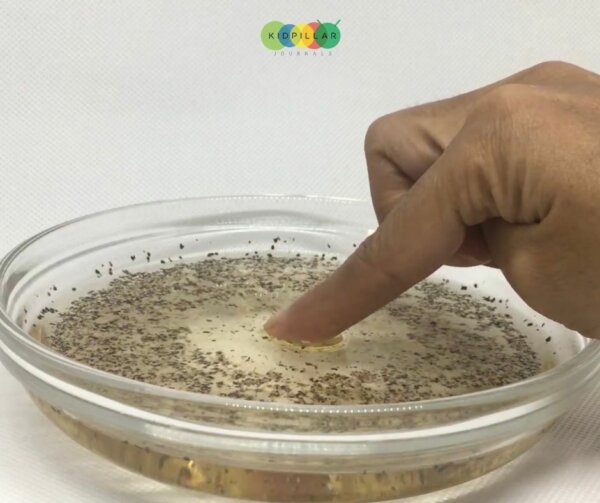
1. “Pepper and soap” experiment
One of the most favorite and easiest science experiments for preschoolers, the Pepper and Dip experiment always amazes and excites children.
Simply fill a flat bowl with water and sprinkle it with ground black pepper.
Then dip the child’s finger in the detergent (or any other liquid soap) and let it touch the surface of the dishes. water
And as if by magic, the pepper will quickly spread around the edges of the plate, creating an impressive effect!
Such a simple experiment to introduce small children to surface tension and at the same time teach them hygiene by doing!
2. Make it rain in a glass
This is a classic science activity for preschool and kindergarten children that develops critical thinking skills. All you need is a clear plastic cup, shaving foam, food coloring and a dropper.
Step 1. Fill the cup two-thirds full with water.
Step 2: Spray the shaving foam onto the water to create a nice, fluffy layer.
Step 3: Mix food coloring with water and use a dropper to gently add the colored water to the shave. foam.
After a few splashes of colored water, you will see the first drops of colored rain breaking through the cloud and into the water. It’s so nice to watch.
Simply the best science experiment to teach preschoolers about weather and clouds.
3. Make bubbles
Blowing bubbles is one of the funnest activities for children. What is interesting is how much children can learn with this extremely simple exercise.
Teach your kids how to make bubbles and tap into math and science concepts.
Quick Tip: Make learning fun with these free printable dinosaur preschool activities!
4. Toothpaste “Elephant”
The kids really enjoyed this science experiment for kids. Children just love the foam produced during this experiment.
Quick Tip: Add literacy, numeracy, art, and motor skills with these easy-to-do-at-home preschool ideas.
5. Magical Milk
Colorful science activities for preschoolers are always exciting, and Magical Milk is just that!
Pour some milk into a wide bowl. Add food coloring to the milk using a dropper or pipette. This is a great fine motor activity for young children.
Next, take a cotton swab and soak it in a soapy solution. Touch the milk with this tip to see an explosion of colors! We guarantee many impressions and oh!
Quick Tip: Add some fun preschool math activities for a well-rounded learning experience.
6. Dancing raisins
Dancing Raisins is one of those preschool science activities that is inexpensive, easy, and only takes two minutes to set up.
Moreover, it is a great way to teach children about buoyancy. No wonder parents and teachers love him.
Fill a clear glass three-quarters full with sparkling water. Drop a few raisins and watch them sink to the bottom of the glass.
But soon they will resurface and fall again! It is a really interesting dance for small children.
For Kindergarten and 1st graders, it can easily be turned into a STEM inquiry where they try to find the reason for the dancing raisins.
Advise them and have them watch the bubbles cling to the raisins and you’ll be surprised how quickly they decipher the science behind the dancing raisins.
Related: Quick Fun. activities like these are a great way to improve your child’s learning. As well as 10 Minutes Math Games that improve mental math skills.
7. Jumping rubber egg
Turn an ordinary egg into a bouncy ball with this easy preschool science experiment. Throw it from a short distance to see how it bounces!!
Such a fun and easy science experiment for preschoolers!
Related: Don’t forget to add humor to these science jokes for kids.
8. Oozing Blood Potion
Kids love trying their hand at gross and scary preschool science experiments, and this baking soda experiment is perfect!
Just take a dish and add tomato puree to it. Using a spoon, add baking soda to the puree and mix.
The acids in the tomato puree react with the vinegar to form oozing bubbles, creating this boiling blood potion experiment.
Such a simple science task that children always like. Don’t wait until Halloween to try this!
Related: Also try your hand at these amazing baking soda experiments for kids.
9. Rainbow Oobleck
No kid can say no to this sensory science inspired by their favorite Dr. Seuss. Few science experiments for preschoolers can compare to this cool and easy activity.
And once you’ve made this awesome concoction, try making Magical Color Changing Oobleck that’s sure to confuse your kids!
It’s like: Build a science lab at home for your science lover with our practical, easy tips!
10. Lava lamp
A lava lamp is a simple preschool science experiment that never ceases to amaze kids! It’s easy, quick, and pocket-friendly, making it one of the most favorite experiments among parents and teachers.
Like: Try your hand at DIY Puffy Paints! They are very easy to make, so even small children will not make a mistake.
11. Pulsating heartbeat
How fun is it to watch your own heartthrob? Yes… we’re talking about literally watching your heartbeat with this super easy and super simple science experiment.
All you need is a toothpick and some play dough. Roll out a small cube of dough and stick a toothpick into it. Place the dough toothpick on the back of your child’s wrist.
Now your child can watch their heart beat as the toothpick moves with each heartbeat
These fun science experiments are a great hands-on way to teach kids about the human body and make science fun! entertained
12. Make flowers that change color
Your preschooler will love this magical flower-changing experiment! This simple and easy to set up science experiment is sure to spark your child’s curiosity and get them thinking.
13. Make ice cream in a bag
This is such an exciting STEM experiment for kids! They will love making bagged ice cream and learning lots of science in this fun science activity.
14. Experiment with an airtight bag
Kids love playing with water, and this science activity lets them have fun without actually getting wet!
15. Revitalize dried leaves
This is one adorable preschool science activity for kids that will bring dried leaves to life…almost! We’re sure your kids will be amazed and delighted with this science activity!
You will need some dry leaves and a bowl of water. Ask your child to crumble a dried leaf and see how easily it crumbles.
Now take another dried leaf and put it in a bowl of water for a few hours.
Now take the dried leaf out of the water and ask the child if it is okay to crumble it. Not anymore!!
Related: Learn more about plant-based activities here!
16. Rainbow experiment with skittles
This is a classic science activity for preschoolers, kindergarteners, and first graders that is fun and easy. These simple science experiments for preschoolers are a great way to foster a love of STEM and ignite curiosity.
Related: Learn what STEM education is and how it can help your kids learn better so you can give your kids the best learning experience.
17. Containers for games on magnets
Magnets are intriguing and must-have experiments for preschoolers. These simple magnetic containers make experimenting with magnets fun and easy. Plus, there are so many creative ways to create these containers for endless hours of exploration
18. Density of salt water
One of the easiest water density experiments for preschoolers, it requires such common kitchen items as salt, grapes, and a clear glass of water.
Fill a glass with water and ask the preschooler to drop some grapes into the glass. The grapes will sink to the bottom.
Now gradually add teaspoons of salt to the water and mix. After about 4-5 teaspoons of salt, the grapes will start to float in the water.
When salt dissolves in water, it increases its density. Soon the water becomes thick enough for the grapes to float.
Quick Tip: Also try these magical Harry Potter STEM activities and science experiments to keep your kids puzzled and learning on the go.
19. Water volcano
This experiment never ceases to amaze children and adults! A fun way to teach science to preschoolers, be sure to try the Water Volcano.
For this interesting experiment you will need:
- Glass jar
- A small bottle
- Water
- Red food coloring
- Ice
Step 1: Take a glass jar and fill it with water. Add ice cubes to cool the water.
Step 2: Heat some water and add red food coloring to it.
Step 3: Take a small bottle, an old essential oil bottle is perfect, and fill it halfway with the warm colored water from step 2.
Step 4: Place this small bottle in a glass jar.
Warm water will flow. up against gravity and form a layer of red water on top of clear water! Just mesmerizing!!
Related: Check Out Other Water Science Experiments To Make Science Fun!
20. Explore colors using chemical reactions
Chemical reactions are fun, and this simple wonder experiment adds color to add to the fun.
Try this volcano experiment with your kids to watch them happily jump and learn science while having fun.
When baking soda reacts with vinegar, a foamy bubble rises in the glasses. dish and makes the child jump with delight.
Related: Check out other fun baking soda experiments for kids.
21. The ocean in a bottle
Another classic experiment for preschoolers, this one for kids who just love science. This fun science activity lets kids create their very own ocean in a bottle for hours of fun!
Similar to: Teach your kids about habitats through hands-on experience with our STEM magazine.
22. Pirate treasure chests
This is an extremely fun activity for preschool and kindergarten children. The best part is how it delves into science and chemical reactions to make science practical for young children.
23. Dancing ghost
Make a ghost dance to your tune with this fun science exercise for kids. Just take a facial tissue and cut a small ghost shape out of it. Make spooky eyes on the ghost neckline to add drama.
Then blow up the balloon and rub it very quickly through your hair for about 20 seconds. Bring this charged balloon close to the ghost and you will see it fly towards the balloon.
Quick Tip: Use a single layer of tissue paper to make your ghost lighter and therefore easier to pick up!
Like: Do you like creepy things? Check out our ghost facts and movies for kids!
24. Butterfly with static electricity
Here’s another cool static electricity demonstration for kids that’s fun and easy to set up. We are sure your kids will love it.
25. Artistic experiment with water and oil
Have fun making art with this creative activity for preschoolers that combines science with art.
26. A balloon in a bottle
This science activity is nothing more than a magic trick, and it’s a great way to engage young children.
These science activities do wonders for critical and logical thinking skills and require little preparation.
27. Sink or swim
This is one of the simplest science exercises that makes buoyancy easier to understand.
What you will need:
- 2 oranges
- Water
- Glass vase
How to do it:
Fill the vase three-quarters full with water. Have your preschooler peel an orange (great for motor skills!) and drop it into the bowl. The peeled orange will sink to the bottom.
Then ask them to drop the unpeeled orange into the vase. This orange will float.
By common logic, an unpeeled orange should float because it’s lighter! But in this case, the lighter object sinks! Can your kids (or you!) guess why?
An orange peel is porous and packed with many air pockets that give it the buoyancy it needs to float. When an orange is peeled, these air pockets are removed, so the peeled orange sinks.
28. DIY Screaming Cup
Make a fun screaming cup, also called a chicken in a cup, while teaching your kids the science of sound. Easy to make, this flashy cup will appeal to both your preschoolers and older kids.
Related: Explore phonics activities for kids and help your kids learn the science of sound.
29. Walking on raw eggs
This is one of the most favorite scientific pastimes in nature. Perfect for a sunny day to chase away boredom.
30. Beans in a bag
Have your children plant beans in a bean bag and watch the seeds grow into leaves, stems and roots. Just the perfect way to get kids involved in gardening for kids.
31. The telephone is on the line
Kids love pretend play and what better way to add to their pretend play than a DIY phone on a string.
32. Balloon amplifier
Certainly one of the easiest science activities for preschoolers, the balloon booster is a hands-on science activity for sound experiments.
All you have to do is blow up a balloon and tie a knot. Now ask your children to make a tapping sound with their fingers while holding the balloon to their ear. The balloon will amplify the sound and make it louder.
33. Floating letters
This is a fun science project for a preschool and kindergarten literacy club.
34. What sweetener do ants prefer?
Nature-inspired science activities are ideal for teaching children about the environment and sparking their curiosity about the environment.
This science activity does just that! This is an interesting experiment that every young child will enjoy.
35. Ice cream in a bag
No wonder kids just love this experiment! It’s easy, it’s fun, and the end result is delicious.
36. Mentos Geyser
This is a classic that will never go out of fashion. This is one of those experiments that is always fun. And so simple!
37. Inflating balloons
This baking soda and vinegar experiment is a great science-based way to blow up balloons!
38. Unicorn Fizz
This is a no-win experiment you can try with the kids anytime with simple pantry ingredients.
39. Grow a salt crystal
Let your children try to make salt crystals at home and learn about the state of matter and solubility in the process.
40. Freeze & Free
One of the most fun science projects for kids, Freeze and Free is a favorite among preschoolers and kindergarteners. A hands-on lesson on states of matter, this is one of the simplest and easiest science experiments for young children.
41. Tower with hearts
Inspired by Valentine’s Day, the challenge is to make the tallest tower of paper hearts! It may sound easy, but it is much more difficult than what it seems at first glance.
Cut out 2 to 25 paper hearts and make a neat slit in the bottom of each heart. Now challenge your children to make the tallest tower using hearts.
Related: Got a kid who loves to build? Explore engineering activities for kids to keep them entertained and develop their innate engineering skills.
42. Reduction of habitat
This is a hands-on winter STEM experiment to teach kids how climate change is affecting the habitats of some of their favorite animals, including penguins, polar bears and seals to name a few.
What you will need:
plate
water
clay/animal figurines in the form of a seal or a bear or a penguin
Large box/tray
Blue food coloring
How to do it
Step 1: Pour water on a plate and place it in the freezer to make a sheet of ice.
Step 2: Use the clay to make a seal or a polar bear if you don’t have their animal figurines.
Step 3: Remove the ice plate from the plate by pouring warm water on the back of the plate. This will be your sea ice.
Step 4. Fill the plastic box halfway with water. Add blue food coloring to make it look like sea water.
Step 5: Place the ice plate in the plastic box.
Step 6: Place your animals (we used a penguin) on the ice plate.
Step 7: Take the assembly and place it outdoors in a sunny location.
You will watch as time passes, the ice sheet will begin to disappear. melt gradually. Thus, the territory (habitat) of your animal decreases.
This is exactly what happens at the poles. Polar ice is gradually melting due to global warming, thus destroying the habitat of polar animals.
Quick Tip: Combine this winter activity with Winter Books for Kids for a complete learning experience.
43. Coding in a cupcake pan
Introduce preschoolers and kindergartners to programming with this easy coding activity for kids. With no screen and hands-on use, it’s definitely worth a try for newbies.
44. Hot water balloon experiment
Such a fun and simple demonstration of how hot air expands and cold air contracts. It will certainly excite and enliven little minds.
45. Fake snow
Children just love to get into artificial snow and make sculptures without freezing.
Fake snow is easy and extremely fast to make. And while kids are creating this fun snow look, they can learn a lot about measuring and the simple science of blending.
46. The Vanishing Penny
This is one of the funnest and easiest science experiments for kids of all ages. All you need for this science experiment is a clear glass, water and a penny.
Take the penny and place it on the table. Place a clear plastic cup on it and try to look at it from the side of the glass.
Then fill the glass with water and try to see the penny again from the same side. Is he still there? Penny magically disappeared.
47. Jelly Bean Science
This is a fun science activity for preschoolers that lets them experiment with jelly beans! Simple, fun and definitely interesting.
48. Experiment with walking water
One of the classic science experiments for preschoolers, this experiment teaches children about absorption as well as mixing colors. The rainbow colors make it very attractive and fun for children.
Related: Love Rainbows? Here are some fun facts about the rainbow that your kids will love!