
🚚 FREE DELIVERY IN UKRAINE • 📞 QUICK ORDER: +380 63 571 3650 • 📚 STEM KITS FOR HOME, SCHOOL AND CLUBS
🚚 FREE DELIVERY IN UKRAINE • 📞 QUICK ORDER: +380 63 571 3650 • 📚 STEM KITS FOR HOME, SCHOOL AND CLUBS
🚚 FREE DELIVERY IN UKRAINE • 📞 QUICK ORDER: +380 63 571 3650 • 📚 STEM KITS FOR HOME, SCHOOL AND CLUBS

A Kiddo’s Guide to Measuring Weight
Everyday life offers many opportunities to teach children about measurement. Measuring and comparing weight is what we do
Everyday life offers many opportunities to teach children about measurement. Measuring and comparing weight is something we regularly do in our daily routine without realizing it.
For example, at the grocery store, you select dry foods for the pantry based on their weight. Similarly, you also perform an approximate weight determination before kneading the dough for the daily bread.
Content
Weight measurement
Weight history
The heaviest animals on the planet
Measures of weight measurement
Weight measurement books for children
How to measure weight
Start teaching kids how to measure weight by introducing the jargon first. (This is a basic premise of the STEM approach to learning.)
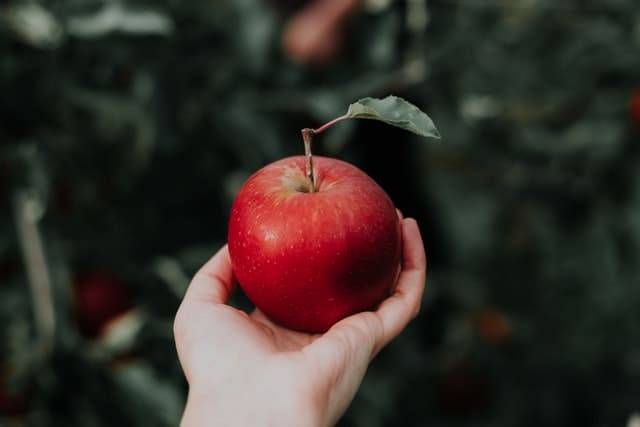
Use words like heavy and light to compare weight. Do a simple exercise to understand this concept. Ask the child to hold an apple in one hand and a pencil in the other.
Explain to her why a pencil is comparatively lighter than an apple. Using an example, explain how heavy and light are comparative words used to measure weight.
The next step in learning how to measure weight is to explain what weight is (advise the kids to put on their engineering hats here). In general, when we talk about the weight of an object, we really mean its mass.
Mass is the amount of matter in a body. For convenience, the terms mass and weight, although different, are used interchangeably in everyday life. To keep things simple and understandable for children, we will use weight as the equivalent of mass.
Following the above assumption, we can say that things with more matter are heavier and those with less matter are lighter.
Explain to the child that it does not necessarily have to do with size. A larger item may be lighter. Just like a beach ball is bigger than a baseball, but definitely lighter.
To quantify or measure weight, we need a unit of measurement that is standard and uniform for a particular attribute. For weight, this attribute is either kilograms or pounds, depending on the scale you are using.
If you are using a metric scale, weight is measured in kilograms (kg). However, in the imperial scale, weight is measured in pounds (lb). These scales vary by country and region. If you are in the US, your weight will be measured in pounds, while in India, UK or Australia, your weight will be measured in kilograms.
Want to know what else can be measured? Get your own measurement log here…
In addition, you will also need a device, a tool for measuring weight. Think of the device you would use to weigh apples or any other fruit. Is this the same tool you use to measure weight?
Depending on the object, we use different tools to measure weight. As with weighing apples, you would use spring scales or scales. These are the ones commonly used by grocery stores.
But you can’t use a spring scale to measure your weight, right? To measure your weight, you will need a platform scale that you can place on the floor.
Related: Check out the measurements for this easy, no-cook Playdough recipe. Your kids will practice measuring skills while making their own play dough.
How much is a kilogram?
A baseball bat weighs almost a kilogram. A large slab of Amul butter weighs half a kilogram (kg) or 500 grams (g). On the other hand, a small paper clip would only weigh one gram!
1 kg = 1000 g
1 lb = 453 g
(Additional note: The pound is written as pound, which is short for “libra,” Latin for weight or weight. You can read more about the pound as a unit of mass here.)
History of Libra
You may ask how it all started. As they say, “Necessity is the mother of invention.” As agriculture brought settlement, people had to trade goods to meet their needs.
Even the earliest civilizations needed tools to measure and quantify this early form of trade. Imagine exchanging wheat for rice, how would you solve this problem if you didn’t have a special weight measurement.
Early civilizations developed methods for solving these problems by exploring their natural surroundings. When it came to weight, it turned out that wheat grains solved the problem.
Later, larger stone-marked units were developed to solve the problem of weighing quantity. From here arose some of the oldest units of measurement of weight – grains and stones.
However, these units varied from civilization to civilization. Therefore, a more standard, uniform unit was needed for trade between different societies. This led to some degree of standard units of measurement.
However, different countries continued to use different units of measurement until 1954. It was only in 1960 that the international system of units was adopted, and with it the “kilogram” was recognized as the official unit for measuring mass by all countries that signed the document.
10 heaviest animals on the planet
The more, the better! These are the rules in the animal world. And when it comes to weight, bigger beasts top the charts. Here are the 10 heaviest animals in the world.
1. Blue whale
The blue whale is not only the largest animal in the world, but also the heaviest. His tongue alone weighs as much as an adult elephant.
To put it into perspective, a blue whale can weigh nearly 190,000 kg or 418,878 pounds at height. Now that’s huge in any proportion!
Similar: Check out more interesting animal facts to be amazed!
2. Whale shark
Next in line is the whale shark – the largest and heaviest fish on the planet. This nearly 12-meter-tall giant weighs a whopping 20,600 kg or 45,415 pounds.
3. African elephant
The largest land mammal, the African elephant, weighs almost 5,000 kg (11,023 lb). This huge herbivore requires approximately 300 pounds of food and can grow up to 13 feet.
4. Asian elephant
The Asian elephant, the smaller counterpart of the African elephant, is a close rival in weight, approaching 4,900 kg or 11,000 pounds.
Asian elephants can be distinguished from African elephants by the size and shape of their ears. The latter (for obvious reasons) have larger ears.
5. White rhinoceros
This endangered species, with only two female white rhinos left, is one of the largest land animals. They weigh almost 3,500 kg (7,716 lb) and can grow up to 14 feet.
Looks like: If you have an animal lover at home, this animal quiz for kids is a must to play with them. We are sure they will enjoy these trivia and learn many new facts during the game.
6. Hippopotamus
The sixth heaviest animal in the world is the hippopotamus, whose body is approximately 14 feet long and weighs 2,000 kg. These herbivores are the third largest land mammals.
7. Giraffe
The tallest animal on Earth, the giraffe, reaches 19 feet and can weigh up to 2,800 pounds (1,270 kg). Giraffes living in Africa also have one of the longest tongues in the animal world at 21 inches.
Quick Tip: Try this easy paper giraffe. It’s sure to delight your kids!
8. Indian bison
Also known as the Asian gaur, the Indian bison is the heaviest cattle in the world. Weighing up to 2,500 pounds, these large herbivores can be identified by the white stripe on their legs.
9. Crocodile
The Australian saltwater crocodile retains the title of heaviest among its species. It can weigh up to 2,300 pounds and reach a whopping 25 feet in length.
Armed with the most powerful jaws in the animal kingdom, they are certainly to be feared.
10. Kodiak bear
This bear is native to Kodiak, Alaska and is the largest predator of the bear species. These mammoth bears weigh 1,800 pounds and can grow up to 10 feet tall.
Weight measurement exercises
1. Balance of kitchen rolls
Make your own balance at home using an empty kitchen roll, an old shoebox lid and glue. These are the perfect DIY scales for kindergarteners who are just learning the concept of weight.
Step 1: Use a ruler to mark the center of the shoe box lid. Draw a line along the width in the center.
Step 2: Add glue to the center line.
Step 3: Now carefully glue the empty toilet roll to the center line.
Let the assembly dry. Your DIY scales are ready. To compare the weight, place the scales on a flat floor. Then place objects of different weights on the end of the boot lid to see which is heavier.
Compare the weight of an apple to an orange using these scales. Which one do you think is harder? Does it match the result on the scales?
2. Scales without tools
This is another DIY scale that doesn’t require any tools and is much stronger than kitchen roll scales. Suitable for ages 5 and up, this will give your kids a chance to learn how to compare weights.
3. Scales for balancing the hanger
Don’t have a sturdy table to try out a DIY baby balance scale? Try these scales for children with your own hands. Easy to put on and take off, this is another pattern for your kids to try.
4. Scales outside the premises
If the above DIY activities are too easy for your child and you want to try them further, these outdoor scales are perfect for your child. A great engineering project for kids, this one is definitely more fun.
5. Do-it-yourself spring scales
Other DIY scales that can be used as an engineering project for kids are suitable for older children.
Books on measuring weight for children
1. On the scales, a difficult tale
This quirky, funny book will teach your kids a lot about weights and the units we use to measure them. Filled with amazing illustrations and fun rhymes, this book explains the science of weight in a light-hearted way.
2. Dragon scale
This is a story about a fierce dragon and his question about weight. When even adults are puzzled by questions, a little girl comes to the rescue and saves the day.
3. I and the measure of things
This is a great book to teach kids about measuring weight and using different units for different items.
4. Millions to measure
Take a fun lesson in the history of measurement with this great book. Beautiful illustrations with a great story make this book a must for learning the world of measurement.