
🚚 FREE DELIVERY IN UKRAINE • 📞 QUICK ORDER: +380 63 571 3650 • 📚 STEM KITS FOR HOME, SCHOOL AND CLUBS
🚚 FREE DELIVERY IN UKRAINE • 📞 QUICK ORDER: +380 63 571 3650 • 📚 STEM KITS FOR HOME, SCHOOL AND CLUBS
🚚 FREE DELIVERY IN UKRAINE • 📞 QUICK ORDER: +380 63 571 3650 • 📚 STEM KITS FOR HOME, SCHOOL AND CLUBS

30 Best Math Classroom Games & Activities With Free Printable
Make teaching and learning math fun and engaging with math games for the classroom. These math games are more like learning than a
Make teaching and learning math fun and engaging with Math Games for the Classroom. These math games are more like play than learning.
Sure to make math lessons fun, Math Classroom Games are a smart way to reinforce kids’ math concepts and skills.
This list of 30 math games for elementary and middle school has so many benefits that it’s a must-have for your math lessons and homework.
- Mathematical games for 1st and 2nd grades
- Mathematical games for 3rd grade
- Mathematical games for 4th grade
- Mathematical games for 5th grade
In addition, these math games for students have a great effect on the classroom atmosphere and student engagement. They reduce student stress, help children focus better and have a positive effect on learning outcomes.
Mathematical games for 1st and 2nd grades
These fun math games for the classroom will engage even the shyest students.
These simple and straightforward games for 1st and 2nd graders will improve arithmetic skills while developing the ability to count quickly in the mind.
1. “Guess the number”
This is a super fun math game for 6 year olds. The task is to guess the secret number chosen by the teacher.
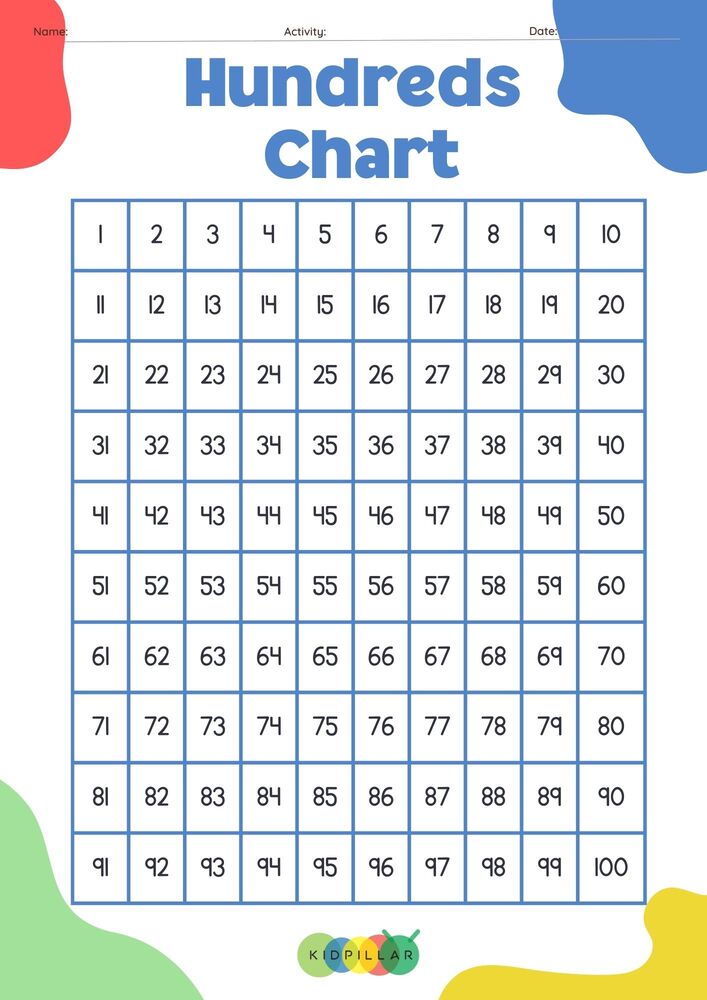
1. Give each student a hundreds table.
2. Choose a number on your number chart and give students clues to help them guess the number. For example: the number is greater than 15; the number is less than 68; the nominal value of a digit in tens is less than the nominal value of a digit in units.
3. The first child to guess the number correctly gets a point.
The prompts can be adjusted according to the students’ level of preparation. This game can be played in groups, putting children into teams to solve the clues and guess the number together.
Table of hundreds
2. Number detectives
In this 2nd grade math game, your students will play detective and use their number sense to guess a number.
Similar to the Guess the Number game, this game is more challenging as it is entirely student driven.
1. Divide students into two groups – detectives and informants.
2. Write numbers up to 50 on the board.
3. The teacher chooses a number and reports it to the informants without telling the detectives.
4. Each informant must give a clue that will help the detective guess the correct number. After all the clues are given, the detectives work together to figure out the correct number.
Related: Pair these classroom math challenges with funny math jokes and puns to add humor to your learning!
3. Pattern of names
This is a hands-on classroom game that teaches children to recognize sequences and helps them identify them. Best of all, children learn to recognize the sequence hidden in their names.
1. Print a free number sequence template. You will need one for each student.
2. Students write their names in the bubbles and repeat until all the bubbles are filled.
3. Students choose one letter from their name and fill in all the bubbles in which it appears.
4. Determine the pattern of appearance of this letter in their names.
Name pattern
4. Musical numerical relationships
This is a super fun math activity for students that will get them moving and dancing. This easy-to-follow math game for the classroom really turns learning number relationships into a game.
· Sticky notes
· Marker
· Paper plates
· Music
How to play:
1. Assign each child a unique number written on a sticker. After the children read the number, they can put the sticker on their shirt.
2. Write at least 3 number relationships corresponding to each number on paper plates and distribute them around the class.
3. The task is to find the numerical ratio while the music is playing. If students find their numerical ratio, they take the plate and stand in place.
4. Students who did not find their numerical combination when the music stopped are eliminated.
5. The first student to find all their number connections wins the game.
This game is like a mathematical version of the classic game of musical chairs and is great for young children who like to move.
Quick tip: Check out these addition and subtraction math games for young learners.
5. Mathematical cubes
This fun game for math lessons combines physical exercises with basic math operations. Math in Action improves students’ mathematical understanding through an interactive game.
One Math in Action Cube: Use our free PDF template to make a cube. Write different tasks on all faces of the cube. Six tasks can be placed on each face and numbered. Come up with fun challenges like jumping, bouncing and spinning!
2 regular cubes
1. Students throw two ordinary dice. The teacher decides whether to add or subtract the resulting numbers. If your children know the multiplication table, you can also ask them to multiply the numbers.
2. Suppose one die has a 6 and the other has a 5. You can ask them to add/subtract/multiply these numbers.
Suppose you asked them to multiply the numbers and the result is 30. The student has to complete the problem written on the 30th number of the action cube.
Printable Action Cubes
6. Say “Buzz”!
Say Bzz is a fun math game for 1st graders and up that will test not only students’ math skills, but their smarts, too!
A great math game to practice multiplication rules as well as simple numbers.
1. Choose your favorite “Buzz” numbers. These can be any numbers – multiples of 3, numbers containing the digit “seven”, multiples of five, etc.
2. Objective: You must make the sound “buzz” instead of saying the number “buzz”. Let’s assume that the numbers “buzz” are 3, 6, 9… and so on.
3. Let all students stand or sit in a circle and start counting from one, and each student names a number. If a student’s number is a “buzz number”, they must say “buzz” instead of the number itself, or they are out!
4. The game continues until all but one player is eliminated.
Quick Tip: Don’t forget to throw in some teacher jokes to make math class more fun!
7. High-low
It’s a math card game that’s also a fun addition and subtraction game to play in the classroom!
Divide the whole class into two teams and count the points. The team with the most points wins the game!
Related: Incorporate puzzles into the learning process to develop thinking skills.
8. Numerical bingo
Number Bingo is a truly versatile classroom math game that can be used to practice a variety of math skills.
Instead of calling out numbers, you call out math examples and students have to guess the answer before crossing off the number on their bingo cards.
Printable Number Bingo
9. “Simon Says”
Simon Says is a fun game to help engage students in math class. The game also includes physical activities such as jumping, running, bouncing and more, so kids will definitely love it! Remember that you can only jump, roll or jump when Simon adds the words “Simon says” to his command.
Assign Simon to the game – a leader who will give commands. Simon in the game can be changed after 10-15 rounds (teams).
Make a list of funny commands, but they should have a mathematical implication. Here are some examples:
1. “Simon says: jump four times forward and two times backward.”
2. “Simon says: circle 3×2 times.”
3. “Simon says: jump three times, clap four times and wave your hands 10 times.”
4. “Simon says: count all the circles in this classroom.”
If Simon doesn’t add “Simon says” to the command, don’t execute it! Only perform an action when Simon says “Simon Says” first!
As the game progresses, make the instructions more difficult. This game can be used as a fun break between math lessons to improve student learning and attention.
10. Throwing bags
This is a simple math game for the classroom that helps children learn to distinguish between digit numbers. You will need boxes labeled with digit numbers and bean bags.
Assign different numbers to students.
Students take turns throwing beanbags into baskets to add up to their assigned number.
Related: Incorporate these fun cube games to subtly introduce math, literacy, and fun into your classroom!
11. Line up
In this 1st grade math game, students line up according to their assigned number. The teacher decides whether the students will stand in ascending or descending order of numbers.
1. Make pieces of paper with different numbers corresponding to the students’ learning level. Shuffle them in a bowl and let each student choose one piece of paper.
2. Their task: students should line up in ascending order of numbers, starting with the smallest number and ending with the largest.
3. Set the timer for about 5 minutes. During this time, students should communicate with each other, discuss their numbers and line up according to their assigned numbers.
This game promotes the development of communication and social skills, and also develops numerical thinking. You can easily turn this into a math game for 4th grade and up by adding decimals, common fractions, or negative numbers.
Mathematical games for 3rd grade
The following math games and activities for the classroom are aimed at addition, subtraction, multiplication, as well as the development of basic algebraic thinking and pattern recognition to build logical thinking.
These math problems for the classroom will help children actively engage in learning, increase their attention and improve the mood of students.
12. Multiplication on a thread
This is a hands-on game for a 3rd grade classroom aimed at practicing multiplication and pattern recognition. It’s a fun STEAM math challenge that’s sure to encourage kids to explore math in their environment, beyond textbooks.
1. Divide students into groups of ten and sit them in a circle. Each child is assigned a number from one to ten
2. Give each group a ball of thread. Assign each group a number and have them pass the string to make a web according to multiples of that number.
For example: A group assigned the number 6 will thread from 0, 6, 2, 8 to 4, and so on, considering only the unit value of multiples of 6, to create a web of threads until they find a pattern.
This great math activity for kids ages 7 and up will help kids not only master the multiplication table, but also help them recognize patterns in seemingly random numbers.
13. Can you do it?
This is a great math game for elementary students that encourages children to think critically and use their creativity to find the answer.
1. Each student receives a sticker with a random number written on it.
2. Then the teacher writes the target number on the board. Students use addition, subtraction, multiplication, or division to form equations that produce the target number.
Students can only use each number once to get the target number.
Two ways to make the game more difficult:
1. In addition to the target number, limit students to using only a set of highlighted numbers.
For example:
Random number: 5, Target number: 70, Numbers provided: 7, 2, 1, 4, 5
Solution: 7*2*5 = 70
For a random number 6, the solution might be (6+4) x 7
For a random number 3, the solution can be (3×4+2)x5
2. Another, even better way is to ask students to reach the target number using only one additional number, no more.
For example:
Random number: 7, target number: 343
Solution: 7 × 49 = 343. So in this case we used only one additional number, namely 49.
You can easily increase the difficulty by using more complex math concepts to make this a math game for middle and high school students.
14. Mathematical square puzzles
Make addition and subtraction math problems more challenging with math square puzzles. These puzzles will encourage children to use addition and subtraction, following certain conditions.
These puzzles are great for developing logical thinking, are a lot of fun, and are the perfect way to turn math into a game.
Print the puzzle or display it on the board and give the class time to solve it. The first student or group to solve the math square correctly gets a point.
Related: Use Math Quiz Questions (with Answers) for Kids to Make Math More Fun!
15. Mathematical charades
Played like a classic charade, this math game for grades 3 and up challenges kids to guess a math phrase.
Printable math tricks
16. “Jeopardy
Jeopardy is one of the most popular games for math classes. It’s a team game that helps practice many math concepts, including arithmetic, geometry, and the number system.
1. Divide the board into 3 sections, each dedicated to a different math topic, such as multiplication, fractions, and geometry.
2. Write down math questions for each topic with different levels of difficulty. Assign a different number of points to each level of difficulty. Easy questions can bring 10 points, medium – 20 points, and difficult – 30 points.
Quick Tip: Use these math puzzles as questions.
1. You can divide the class into four teams!
2. Teams take turns choosing questions from the board.
3. If the answer is correct, they get points. If the answer is incorrect, one point is deducted from their total score.
4. Keep score on the board. The team with the most points at the end wins!
Mathematical games for 4th grade students
Make math more fun for 4th graders with these fun classroom games. These math games for the classroom are great for developing math acumen and helping students test their math skills in a fun, hands-on way!
17. Run and measure
This is a simple math exercise for kids learning to estimate and measure. This math game, which is easy and simple to organize in the classroom, will encourage students to cooperate and work together
1. Divide the class into groups of 4 students.
2. Give each group an object and a standard ruler and place them away from the students.
3. Each group must first estimate how many steps away the object is from them. After they have decided on a score and written it down on paper, they measure how many steps the object is.
4. Finally, each group should compare its estimate with the correct answer in centimeters. Students should use a ruler to convert distances from feet to centimeters.
This math game is easy to play on your own and is the perfect math activity for kids at home.
Tip: Before moving on to the next activity, give students a break during a fun brain break.
18. Name the number
This math game for the classroom is a kind of math quiz. The idea is to ask a random question and make more questions based on the answer to the first question.
1. Divide the class into pairs or groups of three students. Each team works together using pen and paper.
2. Start with a simple calculation and continue to add, subtract, multiply or divide the result of the last problem. For example:
The first instruction: 2+2 (this will be the result of 1)
Second instruction: Multiply result 1 by 7 (this will be result 2)
The third instruction: Divide the result of 2 by 14 and so on.
3. Give at least 5 instructions for each round of the game to make the game longer and more difficult. You can play as many rounds as time allows.
4. Students must quickly solve the problem and at the end show their calculations on paper. The team that answers the most questions correctly wins the game.
This is a dynamic math game for 4th graders and older. It will test their oral counting skills and speed of mathematical calculations.
19. Puzzles for critical thinking
Make 4th grade math fun and develop lateral thinking and logical reasoning with critical thinking math puzzles.
These puzzles are a great printable resource for math centers and a great way to practice arithmetic skills.
You can put students into pairs and ask them to solve a set of puzzles together. The winner is the pair that solves the puzzles correctly and the fastest.
20. Solver of numerical sequences
Identifying “number sequences” is a great way to boost your students’ critical thinking and math skills.
Number sequences are consecutive series of numbers. Here are some examples for better understanding:
- 2, 4, 6, 8, 10, 12, 16… and so on. In this sequence, consecutive integers are constantly multiplied by 2. (2×1=2, 2×2=4, 2×3=6, 2×4=8… and so on.)
- 2, 4, 16, 256, … and so on. In this sequence, the results are doubled (2×2=4, 4×4=16, 16×16=256, 256×256=65536)
- 2, 4, 8, 16, 32, 64, 108, 216… and so on. In this sequence, you add the results to the same number. (2+2= 4, 4+4=8, 8+8= 16… and so on!
1. Draw a large circle (or any other shape!) on the board and determine the number sequence.
2. Inside the circle, write several numbers from your chosen sequence in random order. Suppose you chose “2, 4, 8, 16, 32, 64, 108, 216…”. Add “4, 16, 64, 8, 216” to the circle.
3. Now define a range of numbers for the students, say 1 to 500. If your sequence involves multiplication, you will need a larger range.
4. Task: Students have to guess the secret sequence you have chosen.
5. Students take turns trying to guess the numbers within the selected range.
6. If the student’s guess matches the secret pattern, it is placed inside the circle. If not, then – outside.
Allow students to use their notebooks to figure out the pattern. The first team to guess the pattern wins that round!
This is one of the most fun math games for the classroom that always challenges students!
21. Back 2 Back
In this game, students have to guess their partner’s number using a fun multiplication game. This dynamic math game is a great addition to both the classroom and home.
1. This game is played in pairs.
Stand back to back with your partner at the board; you can’t look at what your partner is writing.
The teacher can be a “leader”. The host will be your guide in this game.
2. Both players will write a random number on the board. Suppose one writes 8 and the other writes 7.
3. The presenter names a random number, which the student must multiply by his number written on the board.
The presenter decides whether to multiply or divide. Suppose the presenter says: “Multiply by 5!” The leader will announce both scores out loud to the class: 40 (8×5) and 35 (7×5).
Based on the answers, the students find out what their partner wrote on the board. Students who are the first to give the correct answer win the round.
This fun classroom game will engage your students in a friendly competition and test their oral counting skills!
Quick Tip: Make learning new words fun with Vocabulary Games for the Classroom.
22. Math Auction: Bid and Win
This math game for elementary school students is a great way to help them develop word problem solving skills. This math role-playing game invites students to bid on stationery using play money.
Aim to collect the most stationery to win the math auction while having fun and learning about money and tactics.
Toy money
A set of stationery
1. Give each player $20 in play money.
2. Lay out various school supplies for auction.
3. Start the auction with one item and continue until all items are sold.
Auction Round: Gum
- Justin bets $1.
- Lily raises her bid to $2.
- Amanda joins with a bet of $3.
- Joey decides to skip.
Amanda wins a basket of gum by bidding $3, subtracts $3 from her play money and adds it to her collection.
Each time a player wins a basket, they pay the bet amount and collect the item. The player with the most stationery wins the math auction! Bonus points if he managed to save money along with it.
Mathematical games for 5th graders
Great for teaching fractions, algebra, multiplication, word count, and teamwork skills, these great games are sure to make math lessons fun and engaging.
23. Sugar mathematics
This is a very interesting math game for students of 5th grade and older. In addition to helping children develop math strategies, this hands-on math activity for students helps them make healthier and better choices.
- Candy
- Sugar packets
1. Divide students into groups. Each group receives a chocolate bar and ten bags of sugar.
2. Each group has to calculate how many sugar packets are in their chocolate bar. The team that gives the correct answer wins the game
This exercise involves multiplication, decision-making and, most importantly, logical thinking.
Students should read the ingredients list for the chocolate bar and the sugar packets to find out how much sugar is in each.
They will then use this knowledge to solve a math problem.
It’s a fun, hands-on way to help students understand how to make food choices, and it’s easy to integrate with the Nutrition/Foods curriculum.
24. Group game with fractions
Make learning about fractions fun with this math game for students. This classroom math game for ages 9 and up will challenge kids and help dispel myths about fractions.
1. Divide the class into groups of at least 10 students each.
2. The teacher will write an ordinary fraction with large numbers, which can be simplified to an equivalent fraction.
3. The group that simplifies the fraction the fastest and presents it correctly wins! For example: Fraction = 20/25; To do this, students will first find its equivalent fraction, i.e. 4/5, and then divide into groups of 4 and 5 students representing the numerator and denominator, respectively.
If there are extra students in the group, they can stand separately to the side of their team.
25. Mathematical combinations
This is an exciting game played in pairs or small groups. This is a great way to get students to practice arithmetic while developing their algebraic skills.
1. Each group starts with one mathematical expression/equation written on paper. For example: 8-4 = 4
2. Each group member should write a different expression on the right-hand side of the equation, making sure that the equation remains correct.
Example: 8-4 = 4 = 10-6 = (10/2) – 1 = (16)^1/2 = 2^2 and so on
3. The game continues until the group runs out of expressions or time runs out.
When making combinations, encourage students to think about a variety of operations such as fractions, powers, in addition to addition, subtraction, multiplication and division.
Undoubtedly one of the most favorite math games in the classroom, Math Combinations will make your math class fun!
26. Game with multipliers
To score as many points as possible, the team must circle all the correct multipliers on the board.
1. Write numbers from 1 to 100 on the board. They can be scattered randomly or in ascending order.
2. Divide students into two teams. One command is the “Multipliers Command” and the other is the “Integer Command”.
3. The “integer command” calls the “multiplier command” a random number, such as 72.
3. Another team tries to find all the factors of this number (numbers that divide 72 without a remainder) in a minute.
If the “Factors” team finds all the multipliers, it gets points. For the number 72, the factors are 1, 2, 3, 4, 6, 8, 9, 12, 18, 24, 36,
4. Teams change roles, and the game continues with other numbers.
Keep score – the team with the most points becomes the “Master of Multipliers”!
27. Mathematical baseball
Play baseball in the classroom and improve your students’ math skills. It also develops their quick learning skills; Math Baseball is a game of speed and quick thinking!
1. Divide the class into teams: one team attacks and the other defends. (You can figure this out by playing Rock, Paper, Scissors.)
2. Draw a large baseball field on the board. You will need magnetic chips of different colors for each team. You can use magnetic Lego bricks as this math baseball game is played on a board!
3. Prepare math questions for different levels. Try to increase the difficulty level as the game progresses.
4. The batting team sends a player to answer the questions.
If he answers correctly, he moves his magnetic cube from home base to first base. Each student can answer one question at a time.
If the second student guesses the correct answer, he can move the magnet from the 1st base to the 2nd base and so on until he reaches the home base. Each team must get four correct answers to reach home base and earn a point!
The defending team may try to answer if the hitting team cannot guess the correct answer.
5. If the batting team cannot answer, it is called an out. Three outs means the teams switch roles — the hitting team becomes the defensive team, and vice versa.
28. Simple or not
In this fun Prime or Not Prime game, students have to decide whether a given number is “prime” or “complex”. To make the game more interesting, turn it into a signal round.
1. Divide students into four or five teams.
2. The teacher writes the number on the board and shows it to the students. Whoever presses the button the fastest has to guess whether the number is prime.
If they get it wrong, the rest of the teams can compete to guess the number. Again, whoever (of the remaining three teams) is the fastest to press the button after counting “1, 2, 3” will get the right to answer.
3. The team representative must explain why, in his opinion, the number is simple or complex.
4. +4 points are awarded for each correct answer and explanation. If students click on a button with an incorrect answer, 1 point is deducted from their total score.
29. Game with dice and fractions
Roll the dice and compare fractions requires a lot of luck and knowing which fractions are bigger or smaller than others.
1. Divide students into two teams! Let each team get a pair of dice.
2. Players from both teams alternately enter the duel.
3. Players roll the dice to find out which numbers are rolled.
Fractions time: The smaller number becomes the numerator and the larger number becomes the denominator.
4. Students compare your fractions using the correct method. The larger fraction gets a point for that round.
Keep playing rounds and earn points. The first team to score 10 points is the division champion!
30. “Pictorial” with fractions
Fraction Pictorio is a creative game that will help you show off your drawing skills and learn fractions on the go!
1. This game can be played in large teams. Divide students into two/four teams.
2. Now prepare 10-20 Pictorio cards with fractions as shown in the picture below.
3. Play Rock, Paper, Scissors to decide who will be the first to draw/guess the fraction card.
4. A player from team A will go to the board, choose a card with a fraction and draw what is written on this card. The player cannot say anything, he can only draw.
The student draws the object marked on the card that represents the fraction, such as “⅓ of a tree,” carefully giving visual clues about the fraction and the object.
5. A team of students must guess the fraction. If they guess correctly, they get a point.
The first team to score 7 points wins the math game!
Frequently asked questions
Source: 30 Engaging Classroom Math Games for Better Learning {With Free Printable}