
🚚 FREE DELIVERY IN UKRAINE • 📞 QUICK ORDER: +380 63 571 3650 • 📚 STEM KITS FOR HOME, SCHOOL AND CLUBS
🚚 FREE DELIVERY IN UKRAINE • 📞 QUICK ORDER: +380 63 571 3650 • 📚 STEM KITS FOR HOME, SCHOOL AND CLUBS
🚚 FREE DELIVERY IN UKRAINE • 📞 QUICK ORDER: +380 63 571 3650 • 📚 STEM KITS FOR HOME, SCHOOL AND CLUBS

16 Spatial Reasoning Activities for Kids
Spatial thinking activities for children help them understand shapes and make their own mental notes. As a simple drawing ...
Spatial thinking exercises for kids help kids understand shapes and take notes. A simple drawing of a house can be described as an arrangement of two rectangles, a parallelogram and a triangle.
Spatial thinking is the ability to manipulate shapes and mentally navigate them. It is the ability to understand how different shapes combine to create recognizable objects.
Tangram is a famous game and one of the most popular spatial thinking exercises for children. It includes geometry, problem solving, visualization, and pattern prediction.
Spatial skills are critical for children because they influence their early math skills and are an important indicator of achievement in STEM fields.
Visuospatial skills are important for success in solving many tasks that we encounter in everyday life. For example, following directions on a map, driving a car, or interacting with the environment.
This is key in developing a child’s sense of size, space, shape, position, direction and movement.
Spatial thinking is an important math skill. Teaching mathematics without addressing spatial reasoning would be like cooking broth without salt. It would have all the right ingredients, but no flavor.
So what is spatial thinking?
Spatial thinking is the ability to manipulate shape and objects, mentally or physically. It provides:
- rotating objects and understanding how the object will look after rotation;
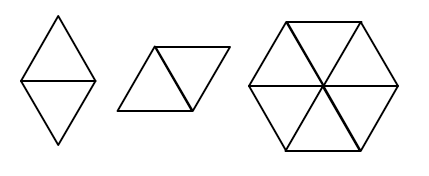
- how shapes and objects fit together and how they can be manipulated. For example, how puzzle pieces fit into each other and how you can create a diamond shape with two triangles;
- Visualization of facades and layout plans of buildings and objects. For example, how the building will look from the front or from a bird’s eye view.
- Understanding the relationships between size and shape attributes of objects. Just as it is impossible to fit a square into a triangle of the same size.
Quick Tip: Make learning spatial reasoning fun with these silly geometry jokes for kids.
Spatial thinking is closely related to geometry and visualization skills. In the same way, mathematics is related to spatial abilities.
To think of mathematics only in terms of numbers would be a great injustice. Mathematical abilities go beyond numbers and manipulating them.
Consider this: Albert Einstein produced his best work – Theory of Relativity – by imagining himself on a beam of light and traveling through space.
How would this be possible without visualization and spatial skills?
Early explorers like Christopher Columbus, Sir Francis Drake, Vasco da Gama relied on their spatial skills to navigate the world.
In fact, it would be wrong to say that without spatial awareness, the great continents could not be discovered.
Movies like Finding Dory, Moana are other examples that highlight the importance of spatial skills in our lives.
Why are spatial skills important?
1. Early spatial reasoning is closely related to math ability and is a strong predictor of math skills. Young children who understand rotation better have better arithmetic skills and number sense.
2. According to research, spatial skills are critical to developing problem-solving skills, critical thinking skills, and even reading comprehension.
3. They promote basic life skills such as parking a car, using maps, packing a lunch, etc.
4. Spatial abilities form the basis of advanced mathematical skills and assist in proportional reasoning, management and data processing skills.
5. Spatial thinking is a key skill in STEM education and the arts. This clearly provides an advantage in STEM for children when taught from an early age.
6. Spatial intelligence is believed to improve cognitive skills, particularly IQ.
Spatial skills can be developed over time and improved through practice and education. The current education system, especially early childhood education, pays little attention to these skills. Thus making them even more important.
According to the study, a single 20-minute session of mental rotation puzzles improved the math performance of children in the control group compared to their peers.
The evidence is compelling and puts spatial intelligence first. There is no reason for parents and educators to ignore this important skill. Spatial thinking is indispensable!
When you engage your child in simple activities such as blocks, painting and drawing, you can significantly improve their spatial thinking skills.
Research indicates a direct link between young children’s spatial reasoning and their arithmetic abilities at the elementary level.
There is also evidence that these skills influence early reading. children
However, despite growing evidence of the importance of spatial skills for children, they are rarely included in the kindergarten or primary curriculum. This puts children in difficult conditions for learning.
But the good news is that spatial skills for children don’t have to be limited to school.
As a parent, you can do many spatial thinking exercises for children to develop and improve these skills at home without spending too much money on toys.
From letting them play freely with blocks to modeling clay, there is plenty of material for every family to develop. spatial skills.
16 spatial thinking exercises for children
1. Block towers
This is one of the first exercises for children on spatial thinking. Let your child stack all the blocks in a tall tower and smash it everywhere. Before you yell at her for not building a structure, stop!
When young children build blocks and then break them, as silly as it may seem, they are working on their sense of geometry, balance, size, shape and position.
Think of this breakdown as a precursor to advanced structure building skills.
2. Draw and draw
Every child draws and paints. Whether it’s random lines or a well-drawn picture, it helps children explore the concepts of space and geometry.
Encourage your children to draw a picture by looking at their surroundings or from a favorite book.
3. Dough for games
Inspire your children to make the objects they see around them using play dough. Manipulating the dough with a real object or animal indicates well-developed spatial understanding and reasoning skills.
Encourage children to create different objects, shapes and patterns using their imaginations.
4. Take them outside
Spatial skills require a lot of visualization. Give free rein to their imagination by taking them for a walk to a nearby park, supermarket or zoo. The more they watch, the better they will be.
Related: Explore outdoor STEM activities to keep your little geniuses excited about learning.
5. Board games and puzzles
Board games teach planning, following instructions, and other spatial skills. Similarly, puzzles help visualize how and where to fit pieces.
Do not limit the child to putting together puzzles. Tangrams are equally fun. Let your child explore it and manipulate the shapes however they want.
Related: Learn other early numeracy skills with these easy-to-follow 10-minute number games. Fast and fun, they are sure to improve your child’s mental skills.
It is not necessary for the child to make pictures according to the task cards. Free to play is good too!
Browse our huge list of board games to find the perfect one for your child.
6. Origami
This ancient Japanese art of paper folding relies heavily on spatial skills. So cut out some square sheets from old newspapers and start doing origami.
Start with easy origami, such as paper airplanes, ships, and gradually progress to more complex tasks.
Origami takes a lot of patience and practice. It is preferable to do this together so that your child can see you and follow you.
When they are confident enough, they can play with origami on their own.
7. Explore the maps
Introduce your child to cards in a fun way. Help them identify the street they live on. If you can’t get them to sit down in front of a book with a map, let them try their hand at Google Maps.
Children are often attracted to technology and are fascinated when they see themselves moving around in an app. When you return home from a walk, ask your child for directions.
8. Use jargon
Introducing children to the correct lingo can greatly help the process. Pre-enter the direction, left-right, up-down, in-out and space words. This will help your child visualize as well as describe their mental images.
9. Relevant structures
This is a fun game where you build a structure using simple blocks or legos and your child has to recreate the corresponding structure.
Start with a simple house or building. Show it to your child for a minute or less and ask them to make a copy of it. Such activities teach children to observe objects and create their imaginary pictures, thus improving their spatial thinking skills.
10. Photography
One of the most popular spatial thinking programs for children, photography helps children analyze images from different angles and depths.
Encourage your children to take different pictures of the same object and compare how it looks from above, from the front, and from behind. Architects use these skills in drawing.
11. Explore shapes
Figures are fundamental blocks of spatial thinking. Take the time to develop your children’s sense of shapes and their attributes.
Ask how different forms are used and how their form attributes affect their use. Although simple at first glance, a good chapter on shapes can be of great benefit to your child’s spatial thinking, logical and mathematical skills.
12. Games for creating stories
This is one of the spatial thinking tasks for children that combines literacy and comprehension with spatial thinking.
Read the book together and then ask your child to draw a structure/building/scene from the book.
It’s very exciting and one of the best silent spatial thinking activities for kids.
13. Animal Yoga
For kids who love to love, this is a must try. Ask your child to look at the animal card and make a yoga pose out of it. You can even play animal yoga videos.
This is one of the few spatial thinking exercises for children that focus on body modulation and visualization of their own body. It would seem that it is simple, but it is not so easy.
14. Explore the mosaics
Mosaics are geometric wonders. To create a mosaic, you must master the art of manipulating objects in space.
Knowledge of mosaics has a positive effect on your child’s spatial thinking, geometry, logical and mathematical skills. We see no reason to miss them.
15. Structures of free parts
Free-form structures provide a great opportunity to explore spatial thinking skills. Give free rein to your child’s imagination by using loose parts such as stones, pencils, wooden sticks.
Invite the child to create something unique in his imagination, using free details.
This will require great spatial awareness along with scientific knowledge to combine and balance objects. Great spatial awareness that boosts STEM activity, it’s worth a try.
16. Experiment with Jenga
Give Jenga blocks a twist and use them as bricks to build structures. To create architectural structures, take inspiration from famous structures or those in your area. With younger children, create shapes using Jenga blocks.
Finally, remember that spatial thinking is not an innate skill or gender. It needs to be cultivated and nurtured by practice. However, it’s never too late or too early to start with a baby.
FAQ
Check out KidPillar STEM eBooks on Shapes, Tessellations, Symmetry, and Patterns