
🚚 FREE DELIVERY IN UKRAINE • 📞 QUICK ORDER: +380 63 571 3650 • 📚 STEM KITS FOR HOME, SCHOOL AND CLUBS
🚚 FREE DELIVERY IN UKRAINE • 📞 QUICK ORDER: +380 63 571 3650 • 📚 STEM KITS FOR HOME, SCHOOL AND CLUBS
🚚 FREE DELIVERY IN UKRAINE • 📞 QUICK ORDER: +380 63 571 3650 • 📚 STEM KITS FOR HOME, SCHOOL AND CLUBS

Is Your Child a Little Engineer? (And What to Do About It)
Have you ever wondered what intrigues your child about playing with blocks and watching them fall over and over again, and yet
Have you ever wondered what gets your child so excited when they play with blocks and watch them fall over and over again and still try to build the next highest tower?
Or your child who is forever playing with dough, rolling the clay into different shapes and forms. Building objects according to their imagination, they come up to you and shout: “Mom, look, I made a dinosaur!” even if you don’t feel like it at all.
Most likely, you have a child engineer at home! Most children begin with natural curiosity, trying to solve the mysteries of the world around them.
And when they grow up, this curiosity either fades or flares up. With a little guidance and the right approach, parents can support this natural instinctive adventurer in their children.
Go to the section that interests you the most!
Or, if you’re more like an engineer, read the whole thing in detail…
Who is an engineer?
An engineer is someone who uses knowledge of science and/or mathematics to figure out the real world. problem.
And in this way, he/she not only helps society, but also introduces innovations that change the way we live.
Related: Make your little engineer laugh with these fun science jokes for kids.
Engineers use their knowledge to find the most efficient solution to a particular problem. The solution may involve inventing a new product/technology or improving existing ones.
For example, Thomas Alva Edison used his scientific knowledge to invent the electric light bulb that helps us see after sunset. Now imagine what life would be like without this invention!
So, by inventing the electric light bulb, Edison solved the problem of limited hours of light. This life-changing invention happened in 1879.
Many years later, in 2013, when Ann Makosinski, a 15-year-old Canadian student, realized that even today some students fail their exams because they don’t have access to light (due to lack of electricity), she invented the Hollow Lightlight.
Related: Learn about these little kids who are changing the world forever.
The Hollow flashlight, which is a thermoelectric light, uses electricity generated by the heat of your hand to power the flashlight.
Thus, solving the problem of light and giving hope to people who still do not have access to the power of fuel lighting systems.
This is what real engineers do! Think of them as problem solvers.
Different types of engineers
Just as there are many different problems, there are different engineers to solve them.
An engineer who sends a rocket into space may not be able to help you figure out the best way to dispose of your trash.
So depending on the problem and area of interest, we have different categories of engineers.
Aerospace sphere. Engineer
Engineers who help design, develop, and manufacture aircraft and spacecraft are called aerospace engineers.
So, if your child dreams of landing on the moon one day, he can become an aerospace engineer.
Biomedical engineer
These engineers try to find solutions to medical problems through technology. Their goal is to improve human longevity and fight disease.
Chemical engineer
Engineers who use their scientific and mathematical knowledge to overcome obstacles in the production and use of chemicals fall into this category.
For example, how to extract minerals and oil, purify polluted water, treat waste water, etc., these engineers are engaged in tasks.
Civil Engineer
You and I have a lot to thank civil engineers for, as they are responsible for building highways, sewage treatment plants, airports, railway stations, dams, and more.
Without these modern buildings, our life would be very difficult.
Computer engineer
These engineers develop software and hardware related to computers. They are responsible for reducing the size of the desktop computer to fit in laptops and now even phones.
Electrical and electronics engineer
Electrical engineers work to solve problems related to electricity and electronic equipment.
Imagine your life without electricity and gadgets for a day to feel how important their work is.
Environmental engineer
As the name suggests, these engineers strive to achieve harmony between human activity and the environment.
They work to solve the problems of disposal of harmful waste and emissions to protect our environment.
Industrial engineer
Industrial engineers work to maximize the productivity of an organization. They create the bigger picture and connect the dots to make things work better.
Materials engineer
These engineers work with different materials to find the most effective ones that could advance technology and science.
Desktops that turn into laptops that eventually turn into portable devices have a lot in common with materials engineers.
Mechanical engineers
They are like the backbone of every industry. They design and improve the performance of your tools, cars, machines and even your child’s toys.
Nuclear engineer
These engineers work with nuclear fuel and try to find ways to use nuclear energy. They also work to protect people from nuclear dangers.
Related: Design Thinking for Kids
Who can become an engineer? Indicative characteristics of children
A child who spends hours making things out of clay, picking up and taking apart blocks, putting things apart to see how they fit together, are natural engineers.
This is inherent in their inquisitive nature. As they grow, they almost instinctively show a great interest in shapes and numbers.
While you may believe they are gifted, they are actually showing off their engineering skills.
Such children will often count blocks while building, use different shapes, try to balance pieces on top of each other, take things apart to build them again, and show a great, almost natural, interest in numbers.
Related: Check these out. Toys for kids to develop their STEM smarts.
Engaging such children in engineering for children should be an obvious choice for parents.
These little engineers will be amazing at logical and critical thinking. With careful guidance, they can definitely become masters in the STEM fields they choose, be it engineering, architecture or even painting.
Yes, painting! We remind you of Leonardo da Vinci! He was not only a great artist, but also an exceptional engineer.
He studied human anatomy in detail, made model airplanes, and created artistic marvels such as the Mona Lisa and the Last Supper.
Samuel Morse, the great artist and founder of the National Academy of Design in Manhattan, is better known for Morse code and the telegraph.
Nobel laureate Santiago Ramón y Cajal, widely known as the father of modern neuroscience, created magical ink on paper depicting his discoveries about the human brain.
Dr. Alfred L. Copley studied the properties of blood and was also an abstract painter. Maria Marian contributed to ecology by painting stunning floral works.
History is full of such amazing, exceptional creatures. More often than not, these talents intersect and mix, creating works of art and science.
Take, for example, a bridge. It is not just an engineering marvel, but also a work of art. Engineering drawing is a major subject in architecture, and engineering is again a scientific view of art.
Only later these disciplines began to be considered independent of each other. Intelligence is not a scalar because it manifests itself in different disciplines.
Although they were misconceived during the Industrial Revolution, recent efforts and increased focus on STEM/STEAM are aimed at developing a more integrated and interdisciplinary approach to improving learning.
Our future generation will most likely follow this cohesive approach to learning, and this will require a change in our approach to parenting. also.
Instead of thinking that children are too young to understand the importance of engineering, we need to invest heavily in engineering for children.
At least for those little crafty hands who show a knack for engineering early.
How to encourage children to engineering
The most important step in teaching a child to be an engineer is to speak and use the language of engineering.
Talk to your kids about what engineering is in very simple terms. Your goal is to guide them, not confuse them with heavy, scientific jargon.
Building a block tower is engineering, shaping clay to mimic an animal or structure is engineering, balancing coins or cards on top of each other is engineering.
In fact, if you take a closer look at your home, you will find so many examples of amazing engineering. When you open the door, the hinges help it move – that’s the technique.
When you push a heavy table instead of lifting it, that’s another example of simple engineering for kids.
Your travel suitcase with wheels is an example of engineering. Your shirt button is another example of simple engineering at work.
Giving these simple examples of engineering activities to children will help them understand the world around them, wherever they are.
Simple engineering exercises for children
In addition to using the right language, engaging children in engineering activities can go a long way in teaching your child how to be an engineer.
Here are some simple and effective ideas for learning engineering for kids, taking their spatial skills to the next level:
1. Look around your house and talk about how simple objects hide engineering developments, such as shirt buttons, a pen, the plan of your house, an electrical panel, etc. Open their eyes to the world of technology.
2. Do simple engineering activities for kids like balancing coins to build structures. Make a house of cards, stack books to see how high the tower you and your child can make.
3. Turn the Jenga tiles into separate pieces to mimic famous structures. The Empire State Building, the Taj Mahal, the Roman Colosseum, the Great Wall of China, the Greek Parthenon are just a few examples.
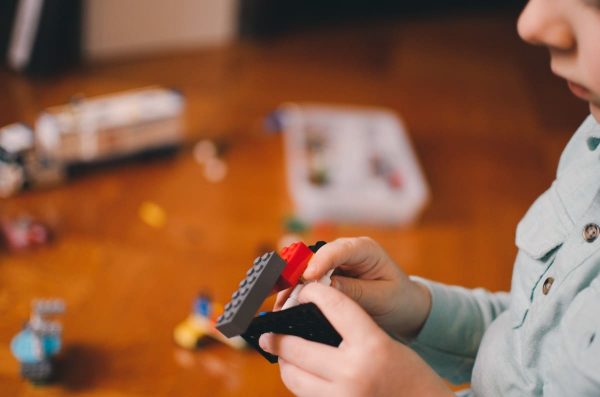
4. Build with Legos and blocks. This is one of the engineering activities for kids that adults like equally. Let your child’s imagination run wild as they build structures and learn basic engineering lessons about balance and weight.
5. Jenga tiles are another great way for kids to explore engineering. Play a game of Jenga to learn balance and center of mass.
6. Play around your child’s toys to discover hidden gadgets. A simple drag-and-drop toy car is a great example of engineering.
7. Another engineering project for children is to draw a plan of their house. All you need is a piece of paper and a pencil. This is a great example of converting 3D structures to 2D structures.
8. Make paper boats, airplanes, animals! The simple game of origami has deeply hidden engineering principles that your child can explore and learn.
9. Reading maps is also a great way to approach engineering for kids. Read simple maps of well-traveled routes with them, such as from your home to school or a neighborhood park.
Now ask them if they can draw their version of the map. The idea is to spark the imagination and ignite the ability to visualize and draw.
10. Look around the furniture in your house for interesting DIY engineering projects. Ask your children if they can make a dining table or chair out of a material of their choice.
11. Create 3D equivalents of 2D shapes using marshmallows and toothpicks.
12. Explore the domino effect with your regular Jenga tiles/boards to ignite the mind of your little engineer. The permutations and combinations are literally endless.
13. Integrate math into engineering by exploring mosaics, patterns in famous architectural wonders. Be it the Taj Mahal or a modern wonder like the Lotus Temple, it is all rich in mathematics, art and engineering.
14. Another fun engineering challenge for kids is a plastic/disposable cup tower. Invite the child to make a tower using only cups and come up with different models of the tower. Definitely to spark curiosity, this engineering activity for kids is worth a try.
15. Explore and experiment with massive nuts and bolts. Mix up a few of them and let your kids find the right matches. You don’t necessarily need plastic ones, although they minimize adult supervision.
16. Make straw bridges. This hands-on activity is a great way to test your engineering skills.
Explore your toolbox with the kids for this simple engineering activity for kids. Show them what real tools look like, tell them their names and uses. This is great for gaining knowledge about hardware and sparking an interest in engineering.
Related: Make sure your child gets the full learning experience with these fun preschool activities you can do at home.
Engineering books for children
Another and very effective way to raise your little engineer is to read books. Reading engineering books for children can help develop technical skills in children.
Stories have the power to inspire like no other. And they are not only tools for improving children’s engineering skills, but also convey a clear message about soft communication skills such as resilience, persistence, growth mindset, hard work and honesty.
Invest in a few titles from the list below and add them to your reading fixer. Even if your child isn’t really into engineering, these inspiring titles have great value and life lessons to learn from.
1. Magnolia Mudd and the Super Jumptastic Launcher Deluxe
A fantastic engineering book for children with colorful, bright illustrations that will ignite your child’s mind. This is the story of Magnolia and her super invention – a device for launching bouquets of flowers. Will definitely please your children.
2. Have fun, Molly Lou Malone
This book will ignite your child’s imagination and creativity. Except for the toys, the heroine of the story makes her own toys only to realize that all it takes is imagination to have fun. This is what engineers and inventors are really made of.
3. So you want to be an inventor?
This name will surely awaken the inventor in your child. It will inspire your child to follow in the footsteps of some of history’s great inventors and discover their strengths.
4. Papa’s Mechanical Fish
A wonderful engineering book for children, Papa’s Mechanical Fish is based on the real-life inventors of Laudner Phillips. This book tells about the fact that not everything always works out and what an engineer must have, in addition to knowledge, to make his inventions work.
5. If I built a car
This is a fantastic fairy tale with amazing illustrations that will capture the heart of you and your child forever. Jack, the main character, has some really crazy, great ideas to create the car of his dreams – the car of the future that you might want to own.
6. Ada Twist, scientist
This is a wonderful story about the girl Ada Twist and her experiments with science. Ada is inquisitive, wants to know a million things and is not afraid of failure. What are real engineers like! It’s a must to ignite curiosity and shape great thinking.
7. The boy who used the wind
It’s an impressive book that’s now also a Netflix Original Movie. History once again confirms that necessity is the mother of invention. It revolves around the courage of a boy who is determined to save his village from drought. A must-have title in children’s technology books!
8. Amazing Matty
How Margaret E. Knight Became an Inventor: This is the inspiring story of Margaret E. Knight, also known as Lady Edison, and how a sketchbook and a few tools can come together to create amazing inventions. This title is sure to inspire your kids to turn their drawings into engineering works. The 2007 Lord of Bank Street is the best children’s book of the year. It is highly recommended!
9. Coppernickel
The Invention: One of the best engineering books for kids, this is a story about friendship and invention. Filled with wit, excitement and imagination, it should definitely be on your child’s reading list.
10. The girl who thought in pictures
The Story of Dr. Temple Grandin: The moving and inspiring story of Dr. Temple Grandin and her exceptional work. This book will teach your children to respect children with different abilities and not think less of them. After all, engineers need imagination and courage.
11. Whoosh!
Whoosh is a story about problem solving, dedication and invention – basically anything engineering. The world we live in is made better by countless inventions and the engineering minds behind them.
12. Ada Byron Lovelace and the thinking machine
This is the wonderful story of Ada Lovelace, the woman who imagined the first computer. This is the perfect read to show children the power of imagination and creativity.
13. Engineering elephants
Designed especially for young children ages 4 to 8, these books combine humor, creativity, and all things engineering. A great start for your kids to understand what engineering is all about.
14. How to raise a lion
As the title suggests, this book introduces children to how engineering can help accomplish a difficult task. With a little creativity and simple machines, you can raise almost anything, especially Leo!
15. The Dumpster Diver
This is a great engineering book for kids to teach them how to solve real-world problems and save the environment. After all, engineering solves real-world problems. It’s a story about a boy who dives to collect ocean trash, not treasure. But what can he do with the trash? Read this to find out!
Another way to inspire your little engineers in a fun and hands-on way is to tackle engineering challenges from classic fairy tales like The Three Little Pigs, Little Red Riding Hood, and Rapunzel.
Turn these timeless tales into an engineering book for kids with little creative potential. Have your children make houses for the Three Little Pigs, a perfect forest maze for Little Red Riding Hood, and a slide or bride for Rapunzel. With a little thought, you can easily create engineering projects for kids based on these stories.
Once your kids are hands-on and learning, you can take part in simple engineering projects for kids. Search your home for materials such as empty plastic bottles, craft sticks and paper to test your imagination and engineering skills.
Engineering projects for children
Engineers learn by doing. Children are no different. There are lots of fun activities and games that develop your child’s critical thinking skills and get them on the path to science and engineering without feeling like “learning”.
1. Paper pinwheel
A simple paper pinwheel provides a great opportunity to apply engineering skills. Plus, this is an easy engineering project for kids ages 4 and up.
Step 1: Take kraft paper or newspaper to create a perfect square. Have your child draw one himself/herself using the scale.
Step 2: Draw diagonals by connecting the opposite corners of the square.
Step 3: Cut out the square.
Step 4: Cut along the diagonals, going up to the middle of the square. The center is the intersection of the diagonal lines.
Step 5: Take the other corners and glue them to the center of the square.
Step 6: Take a pin and insert it into the center of the pinwheel. Make sure it holds all four folds together.
Step 7: Attach the pinwheel to the straw. Your turntable is ready.
Test it by putting it outside to see the force of the wind.
2. Designs of coins
This is a really cool engineering project for kids that kids of all ages really love. All you need is a bowl full of coins and a flat surface to start the fun building.
3. Pom-Pom Shooter
This fun engineering project for kids is suitable for ages 6 and up. But, if you want to help even your youngest child from 3 years old, you can participate and get initial knowledge about technology for children.
This project is sure to introduce your kids to various science concepts and promises hours of fun.
4. Paper bridges
Build a paper bridge by folding books at both ends and using the paper as a bridge. Now line up the coins to see if your paper bridge is strong enough.
Can you work on your design to make the bridge stronger? This is a great hands-on engineering activity for kids that is sure to delight little engineers.
5. Marble Run
Turn your old shoebox into a marble maze with this easy engineering project for kids. You can use roll paper instead of straws to make it more eco-friendly.
This is a simple DIY engineering project for kids that will inspire your kids to make their own toys out of trash.
6. Flags of countries
A great hands-on engineering activity for kids, this one will also help your child learn about country flags. All you need are blocks and imagination.
Show the flag of the country and ask our child to recreate it using only cubes. Excellently demonstrates observation and resourcefulness.
7. Recycling of plastic bottles
Ask your children what they can do with old plastic bottles and if they can solve the problem of plastic pollution by using them in any way. This will help develop logical reasoning and critical thinking skills.
It will also give them a sense of responsibility and boost their confidence as they come up with ideas that can make a positive difference in the world.
You could also use this for a school science fair or Earth Day project to show how many ways you can recycle a plastic bottle at home. It will definitely get applause and attract attention.
8. Paper Bag Challenge. Заохочуйте їх виготовити те, що вони, ймовірно, зможуть продати.
This could easily turn into a school science fair project if they can come up with a simple tool to make paper bags or a newspaper basket. Imagination is the key.
9. Block Builder Challenge
This is a really great engineering project for kids of all ages. Open-ended and inspired by individual parts, ask your child to build something they see around them, such as a car, house or boat.
Help her draw her idea, then take on the task of building it using blocks and other individual pieces.
10. Do-it-yourself braille font
One of the most important tasks of an engineer is to solve real problems. That’s what engineers are for!
Invite your child to create a system to help people with visual impairments. Use a blindfold to cover their eyes to help them empathize with the visual impairment.
When they can understand the problems, ask them if they can think of any possible solutions. We designed our own Braille font using Lego bricks.
11. Balancing Butterfly
This is a super fun engineering project for kids that combines elements of art with engineering science.
Suitable for little engineers ages 6 and up, this fun project can lead to many more experiments with mass and center of gravity.
12. Working model of a windmill with your own hands
A working windmill model is a great example of demonstrating the power of wind and how natural resources can be used to solve real-world problems.
What’s more, the materials used in this engineering project for kids are easily available at home (some even junk!).
You will need:
- skewer
- empty toilet paper Roll
- Clay
- Origami sheet/ Old newspaper
- Scissors
- Paper hole punch
- Paper cup
- Twine
How to do it:
Step 1: Use an origami sheet to make pinwheels. For instructions, refer to the first engineering project – Paper Pinwheel. Instead of securing the pinwheels with a pin, insert a skewer into it.
Step 2: Use clay to fasten the spinners to the front and back of the skewer so that it does not move along the length of the skewer.
Step 3: Punch two holes near the edge of the paper cup. The holes should be opposite each other.
Step 4: Pull the twine through the holes and tie a knot. Leave a loose end at least 10 inches long.
Step 5: Insert the spinner skewer through the toilet paper roll.
Step 6: Attach the twine used to lace the cup to the free end of the skewer. Your working windmill with your own hands is ready!
13. DIY Popsicle Stick Catapult
DIY Popsicle Stick Catapult is a simple engineering project for kids that promises lots of fun, is quick and easy.
A great example of engineering and physics in action, this is definitely a great STEM project for kids.
Engineer kids who are changing the world
“You’re just a kid” doesn’t mean. cut more We know that there are limits to what children can do, but there are also no limits to what they can do, given the right encouragement.
There are hundreds of kid innovators all over the world, and some of them are creating things that will astonish even governments!
Learning about young kids who are self-taught engineers is another way to inspire your kids. Anything can be achieved with the power of right thinking and hard work.
Knowing about kids who are normal kids but have gone through the hard way of experimenting and learning will surely engage your kids and make them believe in themselves.
You can also check out our comprehensive list of biographies for kids for some real inspiration.
1. Calvin Dow
Born in Sierra Leone, Kevin Doe is known as the world’s youngest self-taught engineer. When he was 13 years old, he invented a battery capable of supplying electricity to homes in the power-scarce city of Freetown.
He also created a microphone, a radio amplifier, a sound amplifier and a three-channel mixer. Quite a lot when you are self-taught and build everything from discarded objects and scrap.
2. Ann Makosinski
A Canadian inventor has developed a flashlight called Hollow FlashLight that uses body heat as a power source. No batteries required! The creation of the flashlight was inspired by the desire to help a friend who had no energy at night and was struggling to study.
3. Cassandra Lin
This teenager is doing a great job helping his community and saving the environment. She found a solution to turn used and discarded cooking oil into biofuel to heat the homes of the needy. Her work has earned her numerous accolades and awards.
4. Gitanjali Rao
This 12-year-old boy has been named America’s Best Young Scientist for inventing a life-saving device that can detect lead in water. She was inspired by her affordable solution after witnessing Michigan’s water crisis.
5. Gursimran Singh
This teenager has developed a device that helps visually impaired people read easily. His EyeScribe device converts text into speech, thus helping visually impaired people enjoy reading as much as anyone else.
6. Elif Bilgin
After receiving the Scientific American “Science in Action Award” and the “Inspired Idea Award” from Google, Elif Bilgin invented a way to turn banana peels into bioplastics.
This persistent girl succeeded after only 10 failed attempts, with the last two being successful.
7. Kavya Vignesh
This 13-year-old boy invented a robot to save bees. Recently, bees have been threatened with extinction. When Kaya realized how bees die when an unwanted hive is fumigated or destroyed, she came up with a cool idea to save the bees while moving the hive.
8. Ryan Hickman
Appalled by trash and how it ends up in landfills and oceans, this little boy started his own trash recycling business.
To be an innovator, you don’t always have to innovate a product. Finding innovative ways to solve a real-world problem is also beneficial.
9. Easton LaChappelle
This young innovator aims to make prosthetics affordable. The turning point came when he met a 7-year-old child with an $80,000 prosthetic arm.
Shocked by the seriousness of the situation, he decided to make prosthetics more affordable by making them pocket-friendly. His 3D-printed prostheses cost $350, which is even less than 5% of the previous price.
These children are not extraordinary by birth. But unusual because of their tendency to lift others up and solve the problems they face. That’s what engineers do!
Source: Is Your Child a Little Engineer? (And What to Do About It)