
🚚 FREE DELIVERY IN UKRAINE • 📞 QUICK ORDER: +380 63 571 3650 • 📚 STEM KITS FOR HOME, SCHOOL AND CLUBS
🚚 FREE DELIVERY IN UKRAINE • 📞 QUICK ORDER: +380 63 571 3650 • 📚 STEM KITS FOR HOME, SCHOOL AND CLUBS
🚚 FREE DELIVERY IN UKRAINE • 📞 QUICK ORDER: +380 63 571 3650 • 📚 STEM KITS FOR HOME, SCHOOL AND CLUBS

Fun & Easy Popsicle Stick Catapults – DIY Catapult STEM Activity for Kids
The Popsicle Stick Catapult is one of the most fun and easy science projects for kids. With publicly available supplies, kids can
Popsicle stick catapult is one of the most fun and easy science projects for kids. With publicly available materials, kids can make their own launcher that’s nothing but fun!
And whoever thought that understanding physics for children is difficult, you should definitely try to make catapults from popsicle sticks. They help with learning physics and are a great demonstration of Newton’s laws of motion.
And for those of you who are just looking for fun ideas to entertain the kids on a rainy day, be sure to try the popsicle catapult!
Children love to get involved with their hands and make functional things that they can use in their toys.
These homemade popsicle sticks can be used to create fun target games for kids. And who can turn down a fun game of target?
Target games are a favorite of every child. Be it classic darts or bowling, target games delight each of us and bring out our inner child. It would be a great idea to combine these kinds of games with STEM-inspired engineering for kids!
All you have to do is make a popsicle catapult, set goals and score!
Here’s our great guide to building a simple and easy hand stick catapult and setting up a target game for endless fun. It’s just perfect for family games.
How to make a popsicle stick catapult
Work with your kids and let your little engineers make this easy popsicle stick catapult. This super easy popsicle stick catapult construction requires ready-made materials that you may already have at home.
Resources for a popsicle catapult:
- Popsicle sticks or hand chopsticks
- Rubber bands
- Double-sided tape
- Plastic bottle cap/plastic spoon
- Ping-pong Ball/pom-pom
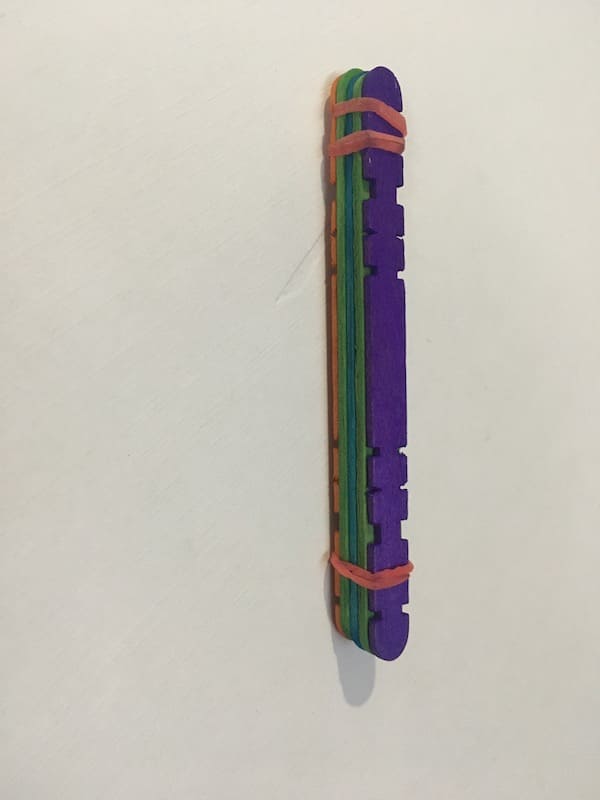
Step 1: Stack five popsicle sticks (craft sticks) together and secure each end with rubber bands.
Step 2: Insert a popsicle stick between the first and second popsicle sticks in the stack.
Step 3: Take another popsicle stick and secure it with the popsicle stick from step 2 to make a V shape. This top popsicle stick is your popsicle stick.
Step 4: Secure the knot with a rubber band to hold all the popsicle sticks.
Step 5: Using double-sided tape, glue the plastic bottle cap to one end of the popsicle stick.
If you are using a plastic spoon, you can secure the plastic spoon to the popsicle stick with rubber bands.
This popsicle catapult design is easy to make and kids ages 4 and up can easily make it with a little help.
Older children can learn the construction of a popsicle stick and try their own version by changing the number of popsicle sticks and improvising.
This is a hands-on way to experiment with physics and understand how a catapult works. is working
Related: Also Try Building Straw Bridges! This is a fun STEM activity for students and kids at home.
Place the ping pong ball in the cap, pull the popsicle stick with your finger and release. Your popsicle stick catapult is ready to launch!
How to set up a popsicle stick catapult target game
This part is quite simple and can have endless combinations depending on your creativity. We have set up two target games that can be played with our Popsicle Stick Catapult.
Popsicle Stick Catapult Target Game 1
What you will need:
- Jenga tiles/blocks
- Figures of animals
Step 1: Make a Jenga tower by placing two Jenga tiles vertically and placing one Jenga tile horizontally above the vertical tiles. Make these towers of different heights by adding more tiles vertically.
Step 2: Place the animal figures on the horizontal tile.
Your goals are set! Now take turns knocking the pieces off the jenga towers with the popsicle stick catapult and score points.
We made five moves each and whoever knocked down the most animals won!
Extremely fun and not so easy! Your kids will have to figure out how catapults work and how the height and distance traveled by the ball are related.
The game “Catapult in a target with an Eskimo” 2
This set is much simpler and more suitable for younger children from 3 to 6 years old. We used jenga tiles because we ran out of masking tape. You can use whatever you have on hand.
Make marks on the floor with masking tape (we used jenga tiles). Between the marks, put a piece of paper indicating the places for planting the pom-pom. Make three such plates – the furthest one with the maximum number of points.
Assign five turns to each player and have them launch pop-poms from popsicle stick catapults. The player with the most points in the end is the winner!
These are two challenge/objective games we’ve created, but the possibilities are endless. You can ask the children to come up with their own versions of goals and tasks. Or you can create some games yourself or check out this visual list of STEM activities to keep your kids engaged (and learning).
Related: Also check out Fun Family Games and Minute to Win It Games for wholesome family fun.
Popsicle Stick Catapult Science
The catapult in the Popsicle Stick is a great, easy-to-understand example of leverage. A lever is a simple machine that has been around for many years and is used to increase applied force.
A catapult includes a load, a fulcrum, and a force. In the popsicle stick catapult above, the pom pom balls act as the load and the force is applied when you push down on the launch stick – the lever arm.
The point where all the popsicle sticks are connected by the rubber band in step 4 acts as the fulcrum of the lever.
After pushing the lever down, potential energy is stored in the rubber band and popsicle stick. sticks
When the lever is released, this potential energy from the popsicle catapult is converted into kinetic energy, giving the pom-pom the energy it needs to launch itself and travel the distance. This is Newton’s third law of motion, which states that every action has an equal and opposite reaction in action.
Can you guess where the first law of motion was applied in the popsicle stick?
Scientific experiment with a catapult with an Eskimo
You can turn this whole activity into a science experiment. Ask your kids how they can increase the power even more and let them come up with different versions of popsicle stick catapults. Practically test their hypotheses.
Check out how the popsicle catapult works when you move the fulcrum to the load? Or vary the number of popsicle sticks used in a stack to create extra voltage to launch the catapult? Or just run the elastic through again to increase the tension?
What works better? Moving the fulcrum or increasing the voltage? Let your kids make a few popsicle stick catapults and record their observations. It’s a great way to combine math with science and learn how to work with data.
This post may contain Amazon affiliate links, which means we receive a small (<5%) commission for your purchase.
Source: Fun & Easy Popsicle Stick Catapults – DIY Catapult STEM Activity for Kids