
🚚 FREE DELIVERY IN UKRAINE • 📞 QUICK ORDER: +380 63 571 3650 • 📚 STEM KITS FOR HOME, SCHOOL AND CLUBS
🚚 FREE DELIVERY IN UKRAINE • 📞 QUICK ORDER: +380 63 571 3650 • 📚 STEM KITS FOR HOME, SCHOOL AND CLUBS
🚚 FREE DELIVERY IN UKRAINE • 📞 QUICK ORDER: +380 63 571 3650 • 📚 STEM KITS FOR HOME, SCHOOL AND CLUBS

How to Make Bubbles With Homemade Bubble Solution
Do your kids love to blow bubbles? Blowing soap bubbles is a classic pastime that children love to do. And bursting bubbles - this
Do your kids love to blow bubbles? Blowing soap bubbles is a classic pastime that children love to do. And shoveling bubbles is another interesting task that fascinates even adults!
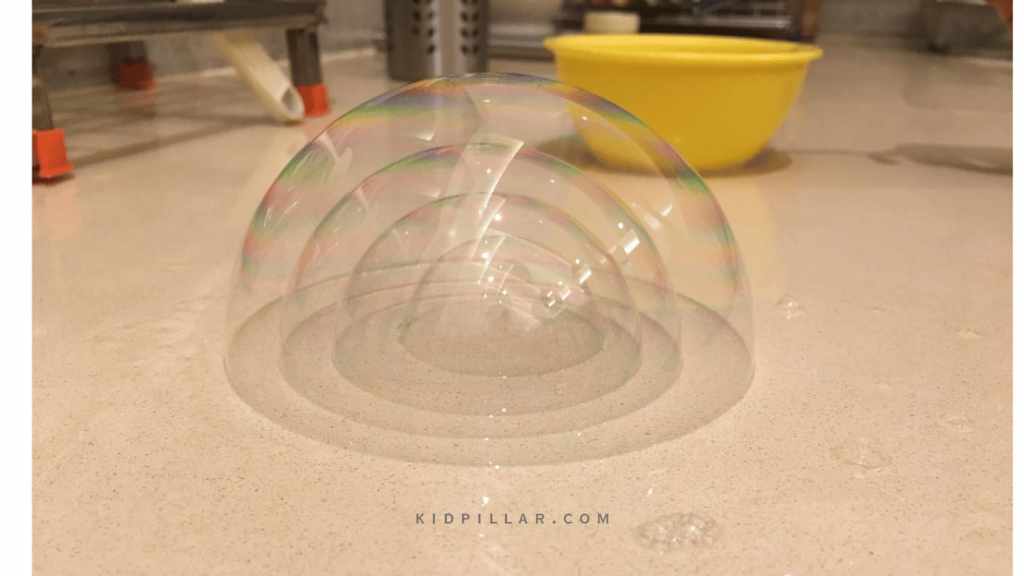
In this article, we share a simple and cost-effective DIY bubble solution recipe that will give you unlimited toppings.
- Do-it-yourself solution for bubbles
- Homemade solution for bubbles without glycerin
- How to make colorful Bubbles
- DIY bubble wand ideas
- Learning while making homemade bubbles
- Experimenting with the best solution for homemade bubbles
- The science behind bubbles
- Frequently asked questions
Kids will love it, and we’ll show parents how to turn this fun experience into a cool science experiment and fun activity for kids.
How to make a solution for bubbles at home
There are several recipes for making a solution for bubbles at home, which consist of different ingredients.
Here we’ll show you some tried and tested recipes that use easy-to-find ingredients and create giant and robust bubbles!
The glycerin bubble recipe below is one of the easiest and definitely one of the best bubble solution recipes to try with kids.
Here’s what you need to make 850-900ml of bubble mix:
- Liquid dish soap/dishwashing detergent – ½ cup (one part)
- Warm water – 3 glasses (six parts)
- Clean the container from the lid
- Glycerin 1 tablespoon (Can be purchased at a pharmacy)
How to do it:
Step 1 : First, add warm water to a clean container.
Step 2 : Next, add liquid dishwashing detergent and mix gently to prevent sudsing.
Step 3: When dish soap and water are thoroughly mixed, glycerin is added to the solution. Stir again to make sure the glycerin is distributed throughout the solution.
Step 4: This is the trickiest step in this easy, simple bubble recipe – you need to let the bubble mixture sit overnight before your kids can blow the bubbles. This is if you want to get the best results.
Related: Distract them from the bubble solution with a lava lamp science experiment. It’s easy, fast, and promises tons of fun!
Children are impatient creatures, and this step really gets on their nerves. This is why we almost always make the bubble solution late at night.
This helps cut down on waiting times and kids will wake up the next day excited without the extra jostling!
If you’re really impatient, let the bubble mixture sit for at least 20 minutes before the kids get out the bubble sticks.
Also try your hand at Oobleck – a non-Newtonian fluid. it will amaze you!
Homemade solution for bubbles without glycerin
This bubble solution recipe is the same as above except for the glycerin. As an alternative to glycerin in a homemade bubble recipe, you can use any of the following bubble mix options:
- ¼ cup corn syrup
- ½ cup of sugar
- One tablespoon of baking soda
Making bubbles at home can’t be more fun and easy than this!
Both bubble solution recipes promise bouncy, bouncy homemade bubbles that will have your kids jumping for joy.
Related; Do you like jumping bubbles? We’re sure your kids will love Bouncing Eggs too. Yes! We are not deceiving you!
Let your kids get out their bubble wands and blow bubbles to see who can make the biggest bubble.
How to make colored bubbles
What about making colored bubbles? Plain, plain old bubbles are great, but colored bubbles really add to the fun.
Simply add a few drops of liquid food coloring to the bubble solution to make your own colored version of bubbles.
DIY Bubble Stick Ideas
While store-bought bubble wands are great, they don’t compare to the homemade bubble wands you can get. your little engineers think and come up with great, creative ideas.
Have fun watching different things create bubbles around your house. Here’s a little tip on what to look out for – holes!
Yes! Look for items with holes.
Here are some suggestions for making homemade bubble wands to get you and your kids started:
- Fly swatters – although very unusual, we assure you that they are great for making bubbles with your own hands.
- Colanders are a bit of a tricky alternative as you’ll need a really big dish to dip them into. inch.
- Slotted and Perforated Spatulas – The kitchen is the best place for home experimenting supplies, and you’ll find lots of things, including slotted and perforated spatulas, that can work as great bubble sticks.
- Straws
- Strainer – Tea strainers work especially well because they are small and easy to dip into the bubble solution.
- Pipe cleaners are great bubble wands for kids. You can also make them in different shapes.
- Socks – Replace old socks and wrap them around the cut bottom of an old plastic bottle.
Related: Enjoy these amazing outdoor STEM activities for kids that stimulate brain development.
We learn to make homemade bubbles
Involve children in making homemade bubbles. solution because it nicely develops several math and science concepts and STEM skills.
Children will learn more about measurement when making bubble solution, and you can introduce the use of ratios in a homemade bubble recipe. Some scenarios:
- Measure the required amount of ingredients using a measuring cylinder.
- Find out how many milliliters are in one ½ cup and 3 cups.
- If you use one full cup of dishwashing liquid, how many cups of warm water will you need?
- The temperature of the water at the beginning and the temperature of the final solution for bubbles after it remains. How much did the temperature drop?
Quick tip: Don’t take everything too seriously! Be sure to throw in a science joke or math pun here and there to keep your kidoo interested.
Experimenting with the best homemade bubble solution
Early exposure to experiments and research helps children develop logical thinking and problem-solving skills.
Fun activities like making bubble solution and blowing bubbles create several opportunities for experimentation.
Here’s an experiment you can do to demonstrate the effects of glycerin, cornstarch/baking soda on bubble strength.
- Label the three cups “Dish soap only,” “Glycerin,” and “Corn syrup or baking soda,” respectively.
- Add an equal amount of warm water to all three cups.
- Add equal amounts of dishwashing detergent to the three containers and mix well.
- Add 1 tablespoon of glycerin to the glycerin cup and 1 tablespoon of corn syrup to the “corn syrup” cup, and add 1 additional tablespoon of water to the “Dishwash Only” cup.
- Mix the three solutions thoroughly and let them stand for some time.
- Create bubbles with the bubble wand (use 3 identical bubble wands or the same bubble wand rinsed with clean water after each turn) and try to catch them on the bubble wand.
- Use the timer to find out how long it takes the bubble to pop.
Take 5 attempts to calculate the average time. Then encourage the children to have a meaningful discussion about the following questions:
- The importance of using equal amounts of water and dishwashing liquid to keep the bubble experiment fair.
- An additional tablespoon of water was added to the Dishwashing Detergent Only cup to ensure that the solutions volume remained constant.
- Experiments are repeated to minimize any errors. By averaging the recorded time, you can get a more reliable result.
- If the experiment is done properly, the results should show that the solutions in the glycerin and cornstarch cups had a longer time than the Dish Soap Only cup.
Discuss which bubble solution you used to blow bubbles that were bigger and longer. Analyze to draw conclusions based on observations.
The science behind soap bubbles
Blowing bubbles is a simple and fun summer activity that incorporates intriguing behind-the-scenes science concepts.
Certain concepts are challenging, but parents can encourage students to explore different ideas and be inspired by the real science behind bubbles.
Here are three key questions to discuss:
Question #1. Why are bubbles inherently spheres?
This question will help children learn about three-dimensional objects and their characteristics.
A sphere is the most efficient three-dimensional shape in terms of volume per surface area. This means it will hold the most content with the least surface area.
A wonderful natural phenomenon that uses this concept is the shape of fruits and vegetables. Most of them are round.
Related: Treat your little ones to fun activities that feel like science with Preschool Science Activities.
This helps increase the content by reducing the coating/skin on the fruit or vegetable. This, in turn, reduces the area exposed to other insects and physical damage.
Internal and external forces in the bubble act in such a way that they narrow its surface to a minimum, so spherical bubbles are formed.
Question #2: What factors affect the size and strength of a bubble?
Bubbles consist of a thin film of soap solution. which consists of three layers, a layer of water sandwiched between two layers of soap on the inside and outside of the bubble.
The bubbles burst when the layer of water evaporates. Glycerin or alternative ingredients you add to the bubble solution help increase the thickness and density of the soap solution.
Related: Check out these fun hygiene activities for kids that will help your kids learn how to fight germs without forcing them to wash their hands.
This creates a barrier that slows down the rate of evaporation. The thicker the solution, the stronger the bubbles and the bigger they can get without bursting.
Question #3, why does soap work better than other liquids?
This is due to surface tension. Surface tension is the force that holds liquid molecules together.
In water, these forces (i.e. surface tension) are too high. This prevents bubbles from forming because the molecules are held tightly together.
Quick Tip: Learn what surface tension is with these hands-on surface tension experiments for kids.
The addition of detergents or soap reduces the surface tension, thereby promoting the formation of bubbles. This is the main effect that helps remove stains, oils and grease from our clothes and dishes.