
🚚 FREE DELIVERY IN UKRAINE • 📞 QUICK ORDER: +380 63 571 3650 • 📚 STEM KITS FOR HOME, SCHOOL AND CLUBS
🚚 FREE DELIVERY IN UKRAINE • 📞 QUICK ORDER: +380 63 571 3650 • 📚 STEM KITS FOR HOME, SCHOOL AND CLUBS
🚚 FREE DELIVERY IN UKRAINE • 📞 QUICK ORDER: +380 63 571 3650 • 📚 STEM KITS FOR HOME, SCHOOL AND CLUBS

How To Make An Electromagnet For Kids
Learning how to make an electromagnet for children is an exciting activity that will interest children of any age. Be it a child of preschool age or
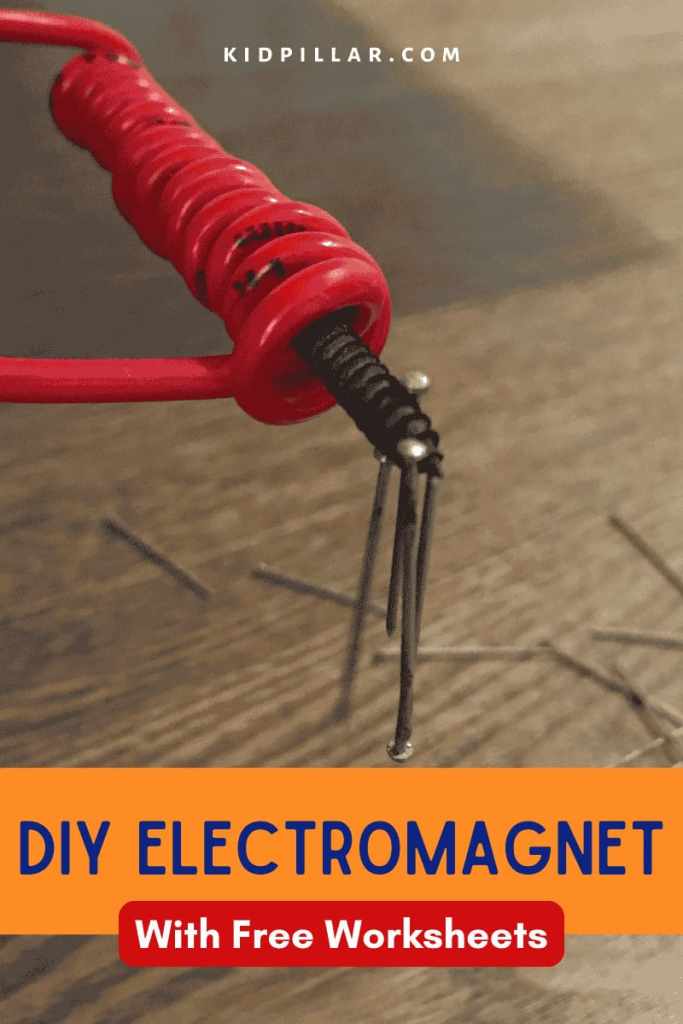
Learning how to make an electromagnet for kids is an exciting activity that will interest children of all ages. Whether preschoolers or teenagers, kids are naturally drawn to magnets, and this fun STEM activity builds on that appeal by encouraging kids to learn about magnetic fields and explore more of these simple science activities.
- What is an electromagnet?
- Do-it-yourself electromagnet
- The science of electromagnetism
- Free Electromagnet Worksheets
But before we start making an electromagnet, let’s first understand what an electromagnet is.
What is an electromagnet?
An electromagnet is a temporary magnet that acts as a magnet when current is passed through it. Unlike a permanent magnet, it runs on electricity and loses its magnetic properties when the current is switched off.
Simply put, think of it as a magnet that can be turned on and off with a switch, just like a normal electrical appliance.
Make an electromagnet for children at home
This cool STEM activity for kids will teach kids how to turn a regular nail into a magnet using simple found objects. home. This is the perfect DIY STEM project for school and a great addition to the electricity and magnet learning blocks.
Consumables for a DIY electromagnet for children
- Iron nail – 5 inches or longer
- Insulated copper wire
- Insulating tape
- Paper clips
- Battery
How to Make an electromagnet step by step
Step 1: Clean the iron nail of any surface dirt and rust.
Step 2: Take the copper wire and wrap it around the nail, leaving about 6 inches of wire on the end. Wrap the wire around the nail without overlapping and leave 1 inch open on both ends of the nail.
Step 3: Cut the wire, leaving 6 inches free after the nail is wrapped.
Step 4: Scrape the loose ends of the wire to remove the outer insulation. Attach the ends of the wire to the battery and secure it with electrical tape.
All! Your simple electromagnet is ready. Bring the paper clips closer to the bare nail and see what happens. Do not touch the electrical wire as it heats up due to heat dissipation.
Disconnect one end of the wire from the battery and see what happens. As mentioned earlier, an electromagnet only works when an electric current is passed through it.
When you disconnect the wire from the battery, the electrical circuit becomes incomplete and the nail no longer functions as an electromagnet.
Did you know that the Earth is a giant magnet due to its molten metal core? For more crazy facts, dive into Weird But True Facts for Kids!
The science of electromagnets
Electromagnets work on the fundamental principle of electromagnetism, which states that a moving electric current creates a magnetic field around it, and vice versa. It was first observed by Hans Christian Orsted, a Danish scientist in 1820.
Electromagnets use this property to create temporary magnets that can be turned on and off. When an electric current is passed through a wire, in this case a copper wire, a small magnetic field is created around it. To make it stronger, the wire is wound in a spiral to block the magnetic field created by the electric current.
Although this creates a magnetic force and acts as an electromagnet, it is not strong enough to attract paper clips. To make it stronger and to make our simple electromagnet work, you need to add an iron nail (scientifically also called a core) – a ferromagnetic material that behaves like a magnet when current is passed through it.
Together, the twisted wire (known as a solenoid) and the nail create a magnetic field strong enough to attract paper clips.
Now that you pretty much understand how electromagnets work, ask the children if they can think of ways to make their electromagnet stronger. Let them experiment by wrapping less and more wire around the nail and seeing the strength of their electromagnet using a stronger battery and different core materials.
Make sure you change only one variable at a time and keep the others constant to see the correlation between them.
These simple science activities make incredibly simple yet informative STEM projects for students and kids at home.
Free Electromagnet Worksheets