
🚚 FREE DELIVERY IN UKRAINE • 📞 QUICK ORDER: +380 63 571 3650 • 📚 STEM KITS FOR HOME, SCHOOL AND CLUBS
🚚 FREE DELIVERY IN UKRAINE • 📞 QUICK ORDER: +380 63 571 3650 • 📚 STEM KITS FOR HOME, SCHOOL AND CLUBS
🚚 FREE DELIVERY IN UKRAINE • 📞 QUICK ORDER: +380 63 571 3650 • 📚 STEM KITS FOR HOME, SCHOOL AND CLUBS

How to Build a Science Lab at Home for Kids (5-9 Years)
Kids are naturally curious. Questioning almost anything and everything they see, they are born scientists and researchers. It would be
Children are naturally curious. Questioning almost anything and everything they see, they are born scientists and researchers. This would be the perfect gift to help them explore this innate trait with a dedicated space, their own science lab, for their research.
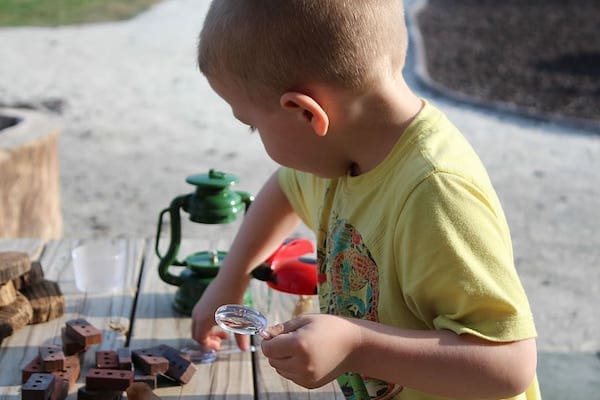
Curious kids should have a home science lab. It is a tool to increase children’s interest in STEM fields. Children who are encouraged to explore and experiment develop excellent critical thinking, problem solving and logical skills.
A safe environment for exploration and tinkering can help children satisfy their innate curiosity, learn to be independent and think for themselves. For parents, a home science lab can turn into a space for dispelling boredom.
How to build a science laboratory at home for children (ages 5-9)
Creating a science lab at home requires you to be mindful of the space and materials you stock. With a little effort, you can easily create a special space for your little scientist without breaking the bank.
1. Choose a space for your lab
The most important thing to consider when creating a science lab at home is a dedicated space where your child can freely and independently experiment.
However, you don’t necessarily need a dedicated science lab room. You need a well-lit and ventilated place.
Your garage, laundry room, or a small corner in your study or porch are perfect for creating a science space for your kids.
Second, the space should be easily accessible and risk-free. The space should be such that you feel comfortable leaving the children alone to mess with things around.
2. Props for a scientific laboratory
Table
One of the most important items in a home science lab for children is a table. The workbench or table should be strong and well balanced.
A folding table or chauki is usually suitable. You can place two chowkis next to each other to make one long table.
Plastic mat
Another thing that you will definitely need to set up a science lab at home is a plastic mat to cover the floor. This will protect your floor from spills and also make cleaning easier. What an interesting scientific setup if it can’t be messy.
Storage compartments
Use compartments to store science supplies and materials. Your kids should be able to open these boxes easily. You can use ziplock bags or ziplock boxes that are airtight and easy to open with small hands.
If you choose ziplock bags, you can store them in empty shoe boxes to increase storage space.
If your desk has drawers, cover them with organizers to make better use of the space. Remember that space utilization is the key to creating a science lab at home. Use label on containers/boxes/bags to label ingredients correctly.
3. Tools for a scientific laboratory
The next step in creating a scientific laboratory at home is to equip it with the necessary scientific instruments and laboratory equipment. Some basic tools for a science lab:
- flashlight
- prism
- geometric box
- elastic bands
- pipettes
- empty cans/glasses
- test tubes
- magnifying glass
- view errors
- pens and pencils. Coat
These are some of the basic lab supplies for a science lab. You can add or subtract them according to your child’s interests and your comfort level. The idea is to have things on hand for scientific research.
Apart from these, you can also keep some kitchen ingredients like baking soda, baking powder, yeast in your science lab.
Chemicals like borax, hydrogen peroxide, potassium permanganate and alcohol require more careful storage and you can keep them under your nose.
Science Sets
- Geological Rock kits
- Do-it-yourself slime kits
- Do-it-yourself kinetic sand
- Electronic sets
- Set of minerals
- Sets of alloys
- Set for making soap
- A set for making perfumes
- Set for a windmill
- Hydroponics Set
These are some of the popular kits for kids that make it easy to explore science. If you’re not an avid science fan yourself, these kits can come in handy and help your kids experiment and learn.
Scientific files and records
This is a must for any scientific research and all scientific laboratories. Provide your children with a box file to help them store their observations and record them for future reference.
A clear, organized way of filing can go a long way in repeating what has been done before. In addition, observation and recording are an important part of any science experiment and therefore require a dedicated space in your laboratory.
If you are prepared with the above settings, it will be easy for children to experiment in their own science lab. You can also have peace of mind knowing what your child has access to. It is important to understand what can be done independently and what needs adult supervision.
Discuss with the child the rules of working in the space and the fact that she should properly care for it and clean it after use. Respecting the space will build trust and confidence in both you and your children and make the space more comfortable.
To make sure the space is used to the best of your ability to satisfy your children’s curiosity and develop their inner scientist, it’s a good idea to have a booklet of age- and skill-appropriate experiments on hand. Here are some of our suggestions:
Experiments in the school section
What your kids are learning in school is a good place to start in your science lab. Help them make connections between what they learn at school by doing simple experiments in your science lab.
For example, if they are studying solutions, you can come up with simple solutions like a solution of salt and sugar. Then try mixing oil and water.
A little imagination and creativity can help you experiment. Ask your kids what they’d like to experiment with and you’ll get tons of ideas in case you get stuck.
Quick Tip: Increase the fun with these silly science jokes for kids! We are sure your students will love you for these jokes.
Be sure to follow some of your children’s suggestions, even if they sound strange. This will support their morale and creativity.
Physical experiments for children
There is nothing more exciting than a simple physics experiment that you can do at home in your own science lab.
Split a beam of light using a prism, make different sounds, check the density of materials, experiment with buoyancy, pendulum pattern, static electricity. etc.
In this category, you can conduct many experiments that are extremely simple and fun.
Screaming cup
Make your own magnet
Shooting game with pom-poms
Pendulum art
Related: Try preschool science experiments with younger kids.
Chemical experiments for children
If you have a science lab for kids at home, it’s hard not to get involved in some kitchen chemistry experiments for kids.
Mix together kitchen ingredients like lemon juice and baking soda to see what happens. Make saturated solutions of salt and sugar, make slime, whip up your own playdough and a non-Newtonian fluid for starters.
If you have the patience, you can grow your own crystals or make inflatable eggs and bath bombs.
Oobleck
Experiments with baking soda
An experiment with an egg in vinegar
DIY slime
Lemon volcano
Kitchen ingredients Play dough
Experiments with dry ice
Biological experiments for children
Let your child become a little planter and experiment with leaves and plant parts. Young children usually learn about plants as part of the school curriculum, and carrying out relevant experiments at home will enhance their learning.
Let your child look at a leaf under a microscope, examine the parts of a beetle with a bug viewer, and memorize their observations. These simple biology experiments will greatly enrich your child’s mind and help him appreciate nature better.
Why Onions Make You Cry – STEM Activity
Science experiment with popcorn
Make jumping eggs
Toothpaste for an elephant
Extract the DNA
Engineering and mechanical experiments for children
This category of experimentation is fun — and brings out the engineer in your child! The best part is that they can be made with easily found loose parts and recycling.
Let your child set up a tower of paper cups, build bridges, make catapults and blocks from simple individual parts. Let them tinker and think about paper airplane designs and come up with their own versions. Make a car from cardboard rolls and bottle caps, construct robots from constructors. Imagination is the main thing.
Pencil design.
Make a popsicle stick catapult
Do-it-yourself windmill
Make a balloon car
Earth science experiments
This category of experiments includes water cycle experiments, soil studies, and wet dish experiments. Most of them are easy to set up and don’t take much time.
Explore what the Earth is made of, uncover the layers of the soil, create a barometer and weather vanes to spark curiosity and help your kids understand what makes their planet a special place to live.
Make your own weather vane
Ocean layers
Make a jar for rainfall yourself
Terrarium in a Mason Jar
Source: How to Build a Science Lab at Home for Kids (5-9 Years)