
🚚 FREE DELIVERY IN UKRAINE • 📞 QUICK ORDER: +380 63 571 3650 • 📚 STEM KITS FOR HOME, SCHOOL AND CLUBS
🚚 FREE DELIVERY IN UKRAINE • 📞 QUICK ORDER: +380 63 571 3650 • 📚 STEM KITS FOR HOME, SCHOOL AND CLUBS
🚚 FREE DELIVERY IN UKRAINE • 📞 QUICK ORDER: +380 63 571 3650 • 📚 STEM KITS FOR HOME, SCHOOL AND CLUBS

Why Does Wind Blow? Explore Wind Science for Kids
Wind science experiments and activities, wind crafts, and children's books are simply great ways to explore wonder and power
Wind science experiments and activities, wind crafts, and children’s books are great ways to explore the wonders and power of wind.
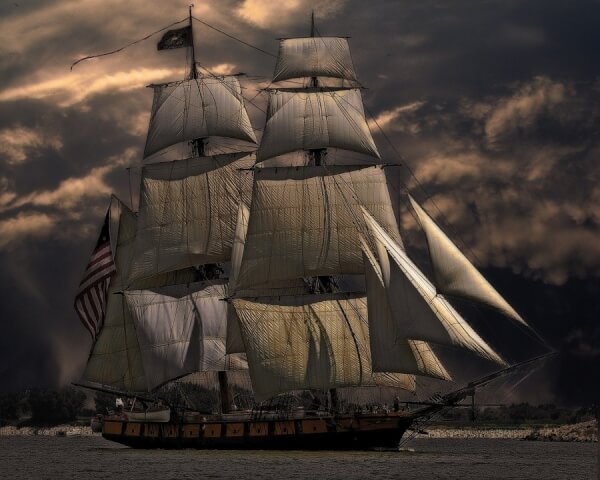
Wind was one of the best satellites of our mother planet – Earth. This is one weather phenomenon that can be as gentle as a breeze and as violent as a tornado.
Before we delve into the mechanics of wind, let us first know what wind is and what is the science behind it, what makes it blow?
- What is wind?
- What makes the wind blow?
- What makes the wind blow fast or slow?
- How is wind measured?
- Types of winds
- Is the wind useful?
- How do windmills produce electricity?
- Wind interesting facts
- Wind and outdoor entertainment for children
- Wind for children
- Books about winds for children
What is wind?
Wind moves air near the earth’s surface. We are surrounded by air. This air, when it moves, is called wind.
Wind greatly affects the weather. It brings rain, snow and even dust! In fact, the Great Indian Monsoon is nothing more than the winds!
For centuries, people have used the power of the wind. From the early sailors of the Nile, who used wind power to propel their boats as far back as 5000 BC, to modern windmills, wind has always made its presence felt.
What causes wind?
A simple answer to this question: uneven heating of the Earth’s surface by the Sun, i.e. temperature difference! The difference in temperature of land, water and air causes wind.
The Earth is heated by the Sun unevenly due to landforms. Different landforms differ in how they absorb and reflect sunlight.
Snow-covered landforms reflect most of the light, making them colder than plains.
Similarly, rocky landforms reflect more sunlight than sand. This uneven heating creates zones of warm air and cold air near the earth’s surface.
Warm air rises, just as smoke from a chimney or campfire or steam from a kettle moves upward into the atmosphere.
This leaves an empty pocket (space) near the earth’s surface. Cool air nearby fills this empty space, creating a wind.
What makes the wind fast or slow?
This is the same cause that causes wind. The faster warm air rises, the faster it will be replaced by cooler air.
And it is the temperature that determines how quickly the air rises. Hot air rises faster than warmer air.
The higher the temperature difference between cool and warm air, the higher the wind speed!
On the Beaufort scale, there are 12 different levels of wind speed from clams to catastrophic.
How is wind measured?
Meteorologists measure wind by two parameters — speed and direction.
Wind speed is measured in miles per hour or kilometers per hour. An instrument called an anemometer is used to measure wind speed.
The fastest wind speed ever recorded in Australia was 254 mph (408 km/h). It came from Tropical Cyclone Olivia.
Wind direction is defined as the direction of the wind source, i.e. where the wind is coming from.
For example, southerly winds blow from south to north. Wind direction can be measured using a weather vane or a weather vane.
What are the different types of winds?
1. Storm
A storm is straight-line wind with little or no rain.
2. Jet flow
A jet stream is a fast river of air moving between two air masses with different temperatures. As a rule, jet streams formed at a height of about 12 km above the earth’s surface always move from west to east.
Air in the jet stream usually travels at about 285 miles per hour.
3. Monsoon
Monsoon winds are seasonal winds that bring heavy rainfall to Hindustan.
4. Trade winds
Winds moving toward the equator are called trade winds. These warm constant winds blow almost throughout the year.
Trade winds that form over land are called continental trade winds, and those that form over the ocean are called maritime trade winds.
5. Gusts of wind
Gusts are sudden bursts of cool air coming in and out of a thunderstorm that collide with cool, dry air below.
6. Sea breeze
A sea breeze refers to the gentle winds that blow from the sea to the land. This usually happens on a warm sunny day in coastal areas.
7. Land breeze
Another coastal wind, the land breeze blows from land to sea at night. Like the sea breeze, the land breeze is also caused by the temperature difference between the air over the sea and the air over the adjacent land.
8. Prevailing winds
As the name suggests, these winds are always present and ongoing. They blow from one direction over a certain area of the Earth.
9. Hurricane
A hurricane is a strong, gigantic, spiraling tropical storm accompanied by rain. These powerful storms are accompanied by high-speed winds of at least 74 mph and can reach 150 mph or more!
These tropical storms are called cyclones in the northern Indian Ocean and typhoons in the western Pacific Ocean.
Is the wind useful?
Although the force of wind is powerful and can be destructive, wind is also a great resource. It plays an important role in our atmosphere and weather cycles.
Wind carries water vapor from one area to another, bringing precipitation to remote areas. It even dries your clothes!
Wind also helps plants grow by carrying their seeds to different places. It even carries pollen from one plant to another so that fruits, vegetables and flowers can grow.
One of the most promising uses of wind is renewable energy. Wind can be used to generate electricity using windmills. Wind energy is actually one of the cleanest forms of energy.
How do windmills produce electricity?
Windmills have been around for centuries. The picturesque windmills of Holland are a wonderful reminder of how people have harnessed the power of the wind for centuries. Traditionally, windmills were used to pump water and grind grain.
But with the development of science, we learned to generate electricity with the help of windmills. The process of generating electricity is quite simple.
When wind moves through the blades of a windmill, the blades move in a circle. The blades are connected to the rotor, which in turn is connected to the shaft leading to the generator.
As the blades move, the motion is transferred to the rotor, then to the shaft, and finally to the generator, which produces electricity.
Wind: interesting facts
1. Windmills have been in use since 2000 BC. the oldest of them were built in Persia and China.
2. Wind farms, also called wind farms, refer to a large number of wind turbines that are installed side by side.
3. The windiest place on Earth is Cape Farewell in Greenland.
4. Some tornadoes can be faster than Formula 1 cars!
5. The largest wind generator in the world is located in Hawaii, USA.
6. Sailboats use the wind to move with the help of sails.
7. A column of air rotating over a reservoir is called a spillway.
8. Anemometers are used to measure wind speed.
9. Winds that last about one minute are called squalls.
10. Many sports and recreation use wind. Such sports include kiteboarding, windsurfing, sailing and paragliding.
11. Winds originating from the Pacific Ocean in the northwestern region of North America and flowing eastward toward the Rocky Mountain range are called Chinook winds.
12. Cats and dogs are known to sense the approach of a tornado in advance.
13. Saturn and Neptune are home to the fastest planetary winds in the Solar System.
14. The solar wind in outer space is a flow of charged particles coming from the Sun.
Did you like these interesting facts? Here’s a comprehensive list of over 150 fascinating fun facts for kids to blow your mind!
Fun with wind and air for children
A great way to teach kindergartners and first graders about wind is to explore wind science experiments and activities. Since you can’t see air, it’s hard for young children to imagine wind!
But these STEM-based exercises will help children see the invisible and understand the mechanics of wind and air.
1. Hot water balloon experiment
This aerial science experiment is the perfect starting point for kids learning about air and wind. This helps children really see how hot and cold air behave.
What you will need:
- Empty plastic bottle
- Air balloon
- A bowl of hot water
- A bowl of ice water
How to do it:
Step 1: Place the balloon in the neck of the empty bottle.
Step 2: Place the bottle in hot water. As heat is transferred from the hot water to the bottle, the air inside the bottle heats up and rises, inflating the balloon.
Step 3: To see how cold air is compressed, place the same hot water bottle in a bowl of ice water. The balloon will compress.
This is a very simple wind exercise to do with children and is very important as it allows children to see firsthand how hot air expands and cold air contracts.
2. Do-it-yourself pinwheel
Making a pinwheel is just the right STEAM activity for kids. It has all the STEM components along with art and is really fun to create.
What you will need:
- A4 format pastel sheet
- Scissors
- Balance
- Straw
- Pin
- Sketch pens
How to do it:
Step 1: Follow the pastel sheet to make a perfect square. Have your child draw one himself/herself using the scale.
Step 2: Draw diagonals by connecting the opposite corners of the square.
Step 3: Cut out the square.
Step 4: Cut along the diagonals, going up to the middle of the square. The center is the intersection of the diagonal lines.
Step 5: Take the other corners and glue them to the center of the square.
Step 6: Using sketch pens, make patterns on the folds.
Step 7: Take a pin and insert it into the center of the pinwheel. Make sure it holds all four folds together.
Step 8: Attach the pinwheel to the straw. Your turntable is ready.
Blow into your pinwheel or take it outside to see the power of the wind.
3. Pinwheel with a balloon
Here is another version of the classic turntable. A hot air balloon is suitable for your budding engineer and suitable for older children who are more advanced than a paper pinwheel.
What you will need:
- Balloon
- Full pin
- Bendy straw
- Pencil with top eraser
- Elastic
How to do it:
Step 1: Take a straw and insert the rigid part of it into the opening of the balloon. Secure the balloon to the straw with an elastic band so that it fits snugly.
Step 2: Use a bobby pin to attach the straw to the top of the pencil eraser so that both ends of the straw are balanced. By folding the bent part of the straw at a right angle, you will balance the straw.
Step 3: Blow into the straw through the bent part to inflate the balloon.
Step 4: When you have inflated the balloon enough, let go and hold the pencil away from your face to watch the balloon spin.
This STEM exercise is a great demonstration of what wind can be like. worked for us Here, the energy of the turbulent wind is converted into kinetic energy, which causes the balloon to rotate around the pin.
4. Do-it-yourself anemometer
An anemometer is a simple device that measures wind speed. It consists of cups that catch the wind and rotate as a result. The anemometer counts these revolutions to calculate the wind speed. A must-try aerial activity for kids as well as a cool science project for kids.
5. What’s in the wind?
This cool air science experiment is like a magic trick. This simple, easy to do and fun activity for kids will help your kids explore what’s really in the wind.
What you need:
- craft paper
- scissors
- vaseline
- twine
- hole punch
Step 1: Cut a 6”X4” Rectangle from craft paper with scissors.
Step 2: Punch one corner of the rectangle.
Step 3: Cut 15” of twine and pull the rectangle through to tie it.
Step 4: Apply a thin layer of Vaseline to one side of the rectangle to make it sticky.
Step 5: Tie the knot outdoors so it can swing freely in the air Crazy Child. From building a DIY car to understanding the power of the wind, you can learn a lot in this simple project.
It is full of fun for kids to give them an idea of how wind can be used to our advantage. This is a great family or party game that can be played alone or even in groups. need:
- Precious stones – 4 packs
- Straws
- Plates
- Bowls
- Timer
Step 1 : Empty the packs of gems onto a plate and distribute the candies evenly.
Step 2 : Set the timer for 1 minute.
Step 3 : The player needs to use the straws to transfer the gems to the corresponding bowls.
The player who moves the most gems into their bowl wins the game and gets to eat their candy too!
7. A balloon in a bottle
This awesome aerial science experiment for kids is nothing short of magic. This must-try STEM challenge is a great demonstration of the fact that air occupies space.
What you will need:
- air balloon
- plastic bottle
- pin
- water
How to do it:
Step 1: Place the balloon inside the bottle and pull its neck over the neck Step 2: Try blowing into the balloon to inflate it!
Step 3: Now fill the bottle one-third full with water, close it with a cap and poke a pin at the bottom of the bottle.
Step 4: Empty the bottle and repeat the step. 1.
Now try to inflate the balloon. The balloon is now magically inflated! Can you guess why the hole in the bottle allows air to escape from the inside, thus allowing the balloon to inflate. bottle. A simple experiment shows that air occupies space. Another fun aerial activity for kids of all ages, as the name suggests, is the aerial game for kids, and the player who races their table tennis the fastest wins. you’ll need: Clay Ping-pong ball Table Straw Step 1: Roll the clay between your hands to make a long rope-like structure. Step 2: Use the rolled clay to make a clay spiral on the table, keeping a path wide enough for the ping pong ball to roll through. Step 3: Place a ping pong ball on the outer end of the spiral. Step 4: Using a straw, guide the ping pong ball to the center of the spiral so the ball doesn’t fall off the table or you have to start over. The player who gets their ping pong ball to the center of the spiral the fastest wins. Game! 9. Experiment “Air is matter” Air, like matter, occupies space, but it is difficult to imagine that it occupies space. This watery experiment comes to the rescue! Whatever you need: Bucket Glass Water Step 1: Fill the bucket three-quarters full with water. Step 2: Hold the glass upside down in your hand and push it straight down to the bottom without tilting it. You will see that the water will not get into his glass. Repeat step 2, turning the beaker slightly to allow air to escape. This experiment shows that air takes up space. Thus, water does not enter the glass. But when you tilt the glass, you create space for the water to escape. Thus, air occupies free space. 10. Make a balloon rocket using simple materials found at home and help them understand Newton’s third law of motion – action and reaction.
Це чудовий практичний урок про те, як можна використовувати енергію вітру для роботи. Ось простий робочий проект вітряка для дітей, який можна легко знайти.
need:
- Skewer
- An empty roll of toilet paper
- Clay
- Origami sheet/plain paper
- Scissors
- hole puncher
- Paper cup
- Twine
How to do it:
Step 1: Use an origami sheet to make pinwheels. Instructions are given in aerial exercise 2 – Pinwheel with your own hands. Instead of securing the pinwheels with a pin, insert a skewer into it.
Step 2: Use clay to fasten the spinners to the front and back of the skewer so that it does not move along the length of the skewer.
Step 3: Punch two holes near the edge of the paper cup. The holes should be opposite each other.
Step 4: Pull the twine through the holes and tie a knot. Leave a loose end at least 10 inches long.
Step 5: Insert the spinner skewer through the toilet paper roll.
Step 6: Attach the twine that ties the cup from the free end of the skewer. Your working windmill with your own hands is ready!
Take the knot in your hand and blow on the pinwheel blade. The air spins the paper pinwheel blade, causing it to spin.
This motion will be transmitted to the twine (shaft), which in turn will cause the twine to coil, lifting the hanging paper cup.
Also read 51 Outdoor STEM Activities for Kids to Make Learning Exciting and Hands-On!
Wind Craft For Kids
1. Windsock
Windsock is a simple and easy wind chime for kids that can be made from common household items in less than 20 minutes. Great for fine motor skills, this is the perfect craft that lets kids determine the direction of the wind.
What you will need:
- An empty roll of toilet paper
- Sketch pens
- Ribbons
- Hole punch with one hole
Step 1: Take an empty toilet paper roll and draw interesting patterns on it to make it look beautiful.
Step 2: Punch holes along the edge of the toilet roll with one hole punch. You can also use a skewer or nail to make holes.
Step 3: Pull the lace ribbons out of the holes and release them at the other end.
Step 4: Punch two holes, facing each other, on the opposite edge of the toilet paper roll.
Step 5: Pull one ribbon through both holes and tie the ends to make a loop.
Your windmill is ready! Hang it by a loop on a tree or on a balcony. The wind vane will sway in the wind and help you know which way the wind is blowing.
2. Inflatable drawing
Blow-up art is an instant hit for kids! All you need is paints, straws and paper. Add rare gallops of paint to the paper and let your kids blow paint through the straw to create their own wind-blown masterpieces.
3. Do-it-yourself kite
A do-it-yourself kite is an indispensable wind craft for children. With math components, this DIY project for kids promises learning fun. All you need is paper and twigs (you can use the ones from the broom!).
4. Wind Chime
The Wind Chime is a great small motor wind craft for kids. It is not only beautiful, but also musical. Just make sure to string the little bells for some great music.
5. Bubble snakes
Kids (and adults!) love bubbles! Although we know about the soapy part, bubbles are actually pockets of air. To make bubble snakes, you will need:
- Old sock
- 2 tablespoons of glycerin
- 4 tablespoons of dish soap
- 1 glass of warm water
- Plastic bottle
- Rubber band
- Dishes with a wide opening.
Step 1: To make the bubble solution, mix water, dish soap, and glycerin together. Leave the solution overnight for best results.
Step 2: Cut off the bottom of the plastic bottle.
Step 3: Cut off the sock above the ankle and discard the top.
Step 4: Wrap the sock with the wider part of the bottle. Secure with a rubber band.
Step 5. Pour the soapy solution into a wide-mouthed dish.
Step 6: Dip the part covered by the sock in the soap solution and blow through the neck of the bottle to create bubbles.
6. Windmills
These paper cup windmills are the perfect windmill for any young wind and air enthusiast. This craft perfectly combines motor skills with creativity to create wonderful windmills.
7. Ribbon tapes
Ribbon suspenders are the perfect item for a windy day. This nature-inspired craft will let your kids run wild. Super easy to make, these ribbon streamers are a real treat.
What you will need:
- Cane
- Ribbons
- Scissors
Cut the ribbons into 12-inch strips. You will need at least 5 of these strips. Just tie strips of ribbon to a stick to make a fun ribbon stick By the way, knot tying is for little kids!
Нам дуже приємно дивитися на вітряні вертушки з переробленого матеріалу. Діти
1. A magical school bus goes up a storm
Join Mr. Fiz on an adventure trip to explore the weather! The Magic Bus series is a great way to introduce them to science concepts.
2. «Кейт, хто приборкав вітер» Навчаючи дітей про навколишнє середовище, ця книга для вас. Хоча ця книга не дуже велика, вона дає потужне повідомлення про те, як все в природі пов’язано.
Ця книга просто чудова, наповнена чудовими ілюстраціями та віршами.
4. Feel the wind
4. Feel the wind
This book covers all the basics about wind and how we can harness this powerful natural resource. This book scores high on the list.
5. Learn about wind energy
Find out how you can use this bountiful natural resource to save the planet and humanity. This book for ages 8 and up will amaze your kids use this renewable, eco-friendly resource and help their planet.
Also, check out STEM books for kids to develop your child’s curiosity and develop thinking skills!
6. What is wind.
Another beginner’s book that explains all about wind, the tools we use to measure wind, and how wind affects people. Beautiful and bright illustrations, interesting facts, presented in an exciting format, this book has become a hit for children.
The history of these twists, turns and spiral storms
This title from National Geographic Kids is about what it’s like to be caught in a Tornado Storm.
8. Gusts and storms: a book about the wind
This great book for elementary students includes information about different types of wind, hurricanes, and tornadoes. Simple sentences and enough information make this book informative for young children.
Ця книжка для дітей від дошкільного віку до 2-го класу оживляє концепцію вітру, яка допоможе маленьким дітям уявити вітер. Наукова книга для дітей, у яку ви просто закохаєтесь.
With so many hands-on activities, crafts and books, we’re sure that learning about the wind will be easy for your kids!
Additional information:
Outdoor science exploration for kids
What is the solstice?
This post may contain Amazon. affiliate links, which means we earn a small (<5%) commission on your purchase.